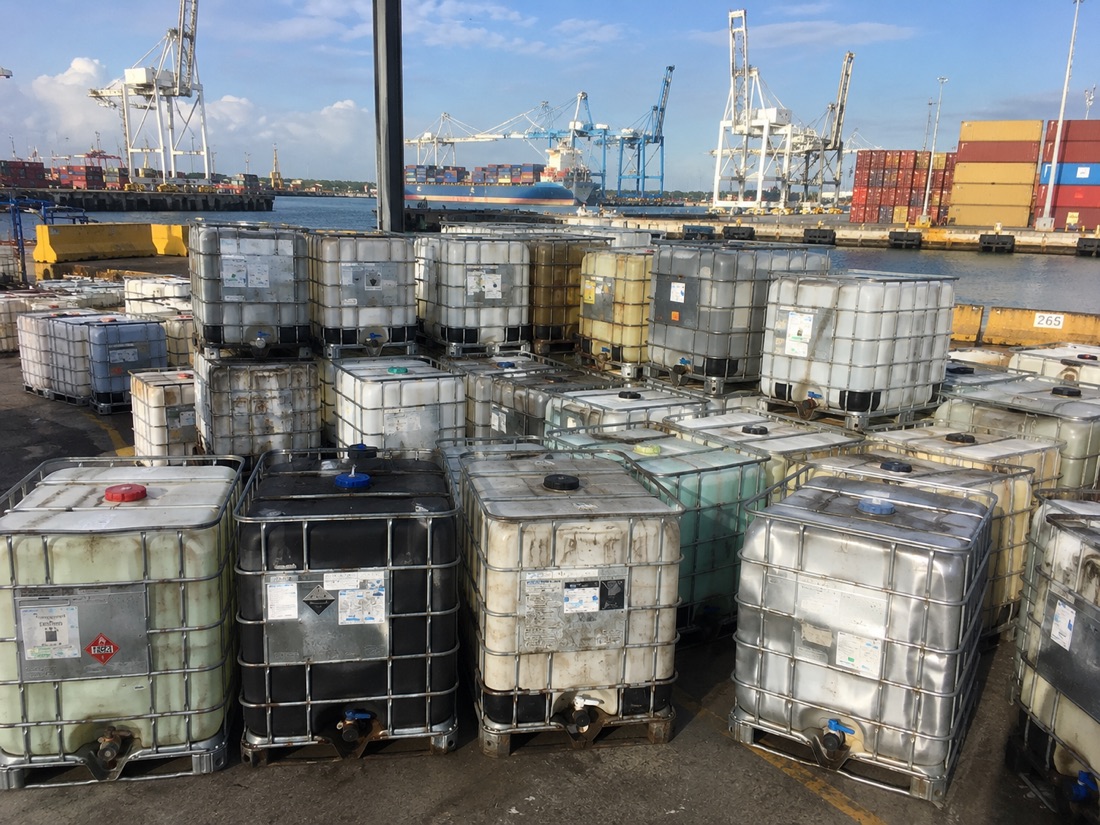
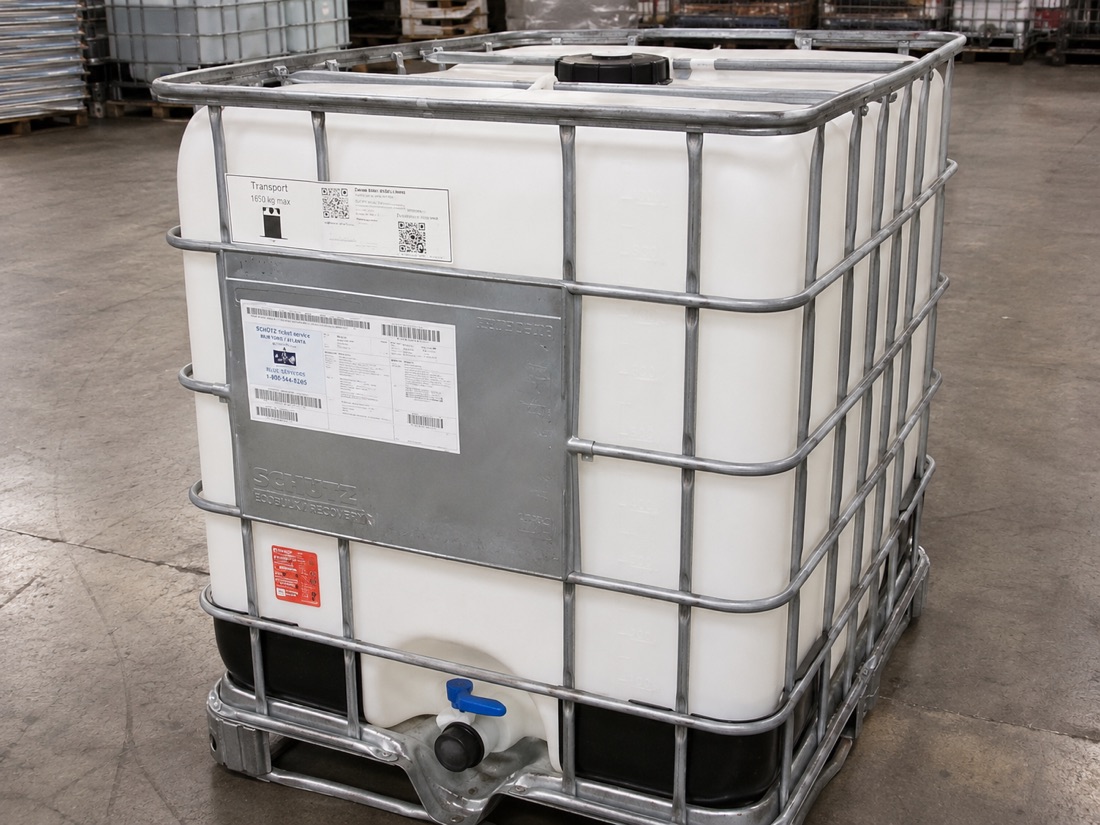
Winter is a materials problem, not just a weather problem
Most people think of winter shipping as a scheduling issue: snow closes roads, transit takes longer. That is true, but the more important story for totes is a materials story. Cold changes how the plastic bottle behaves, how liquids inside behave, and whether seals and valves do their job. Ignore that and you get cracked bottles, seized valves, and frozen product.
We move totes through Texas winters and coordinate shipments into much colder regions, so we plan around cold every year. Here is what actually matters when a loaded or empty tote travels in freezing conditions.
What cold does to the HDPE bottle
High-density polyethylene stays serviceable in cold, but it does get less flexible as temperatures drop. A bottle that would flex and absorb an impact in summer is more brittle in a hard freeze. That has two consequences:
- Handling impacts hurt more. A drop or forklift bump that a warm bottle shrugs off can crack a very cold one. Winter handling should be gentler and slower.
- Freeze-thaw stresses the plastic. Liquids that freeze expand, and that expansion pushes outward on the bottle. Repeated freeze-thaw cycles are especially hard on a container.
The single biggest risk is freezing the contents.
The freezing-contents problem
Water expands when it freezes, and so do water-based products. A tote filled to capacity with a water-based liquid that then freezes is a container under enormous internal pressure. That pressure deforms bottles and can split them.
The rule we live by: never ship a water-based product in a completely full tote through freezing conditions without accounting for expansion. Headspace is your friend in winter.
Practical defenses:
- Leave headspace. Do not fill to the brim if freezing is possible in transit. Expansion needs somewhere to go.
- Know your product's freeze point. Some products freeze near water's point; others are protected by dissolved content or additives. Concentrated or high-solute liquids often resist freezing longer.
- Insulate or heat sensitive loads. For products that must not freeze, insulated covers, tote heaters, or heated transport are the answer. This is a cost decision based on product value.
- Plan transit time realistically. A product survives a short cold snap that a long cold haul would freeze solid.
Valves and fittings in the cold
Valves are the second failure point. A wet valve or fitting can freeze shut, and gaskets stiffen in cold, which can compromise a seal that was fine in warm weather.
| Component | Cold-weather risk | Mitigation |
|---|---|---|
| Ball/butterfly valve | Trapped moisture freezes it shut | Drain and dry before cold storage |
| Gaskets/seals | Stiffen and may leak | Inspect; replace brittle seals |
| Caps and lids | Contract, may loosen | Re-check tightness before dispatch |
Before winter dispatch, we drain residual liquid from valves on empty totes and confirm caps are snug, because a cap that was tight in a warm warehouse can loosen slightly as components contract. Our accessories inventory includes replacement gaskets and caps for exactly the seals that winter tends to expose.
Empty totes in winter
Empty totes are easier but not carefree.
- Any residual liquid left in a bottom valve or low point can freeze and, over freeze-thaw cycles, stress that area. Drain empties fully before cold storage or transit.
- Cold-brittle empty bottles still crack under rough handling. Stack and handle gently.
- Condensation can form inside a temperature-cycling empty tote; keep lids closed to limit moisture ingress.
Scheduling and route realities
The scheduling side still matters, we just do not let it eclipse the materials side.
- Build in buffer time. Winter weather delays freight; a product that must not freeze cannot sit stranded on a cold dock or trailer.
- Communicate temperature requirements to the carrier. A carrier who does not know your load is freeze-sensitive cannot protect it.
- Avoid overnight exposure on unheated docks. The coldest point of many journeys is a trailer or dock sitting still overnight, not the moving truck.
We coordinate all of this through our transportation service, matching route, timing, and protection to what the load actually needs.
The winter checklist
Before any tote moves in freezing conditions, run through this:
- Is the product freeze-sensitive, and is there adequate headspace for expansion?
- Are valves drained and dry, and are gaskets sound?
- Are caps and lids snug after accounting for cold contraction?
- Does the load need insulation or heat?
- Is transit time realistic for the forecast, with buffer?
- Does the carrier know the temperature requirements?
Run that list and winter shipping becomes routine rather than risky. Skip it and you learn the same lessons the hard way, usually with a cracked bottle and a frozen load. If you are shipping totes somewhere cold this season and want a second set of eyes on the plan, get in touch.