What Is an IBC Tote? The Complete Guide
An IBC tote is a reusable, palletized bulk container that holds 200–550 gallons of liquid or flowable material — the workhorse between a 55-gallon drum and a full tanker. This guide covers what it is, how it's built, the sizes, the materials, food-grade versus industrial, and how to read the label so you buy the right one.
Get Your Free Quote
Buying, selling, or just curious what your totes are worth? Tell us what you need — we reply within one business day.
What does "IBC tote" actually mean?
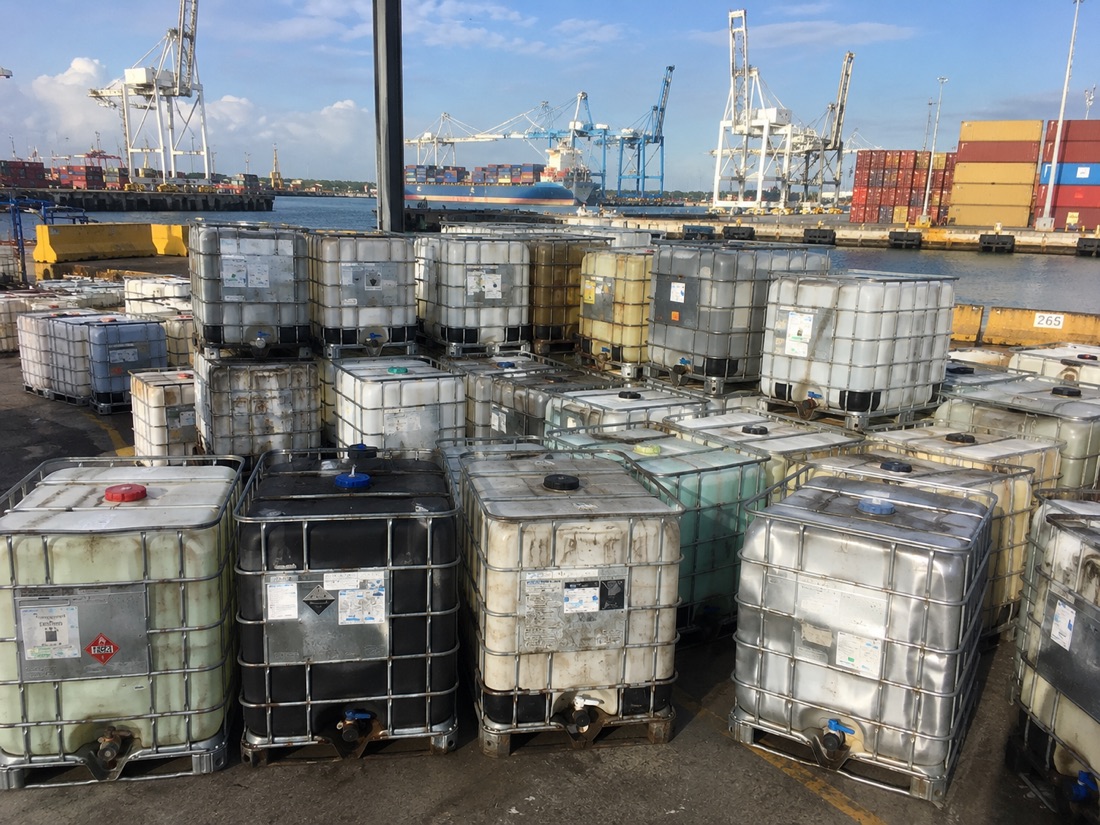
IBC stands for Intermediate Bulk Container. "Intermediate" is the key word: an IBC sits in the size gap between small packaging (drums, pails, jugs) and bulk transport (rail cars, ISO tank containers, road tankers). The word "tote" is North American shorthand for the same thing — in practice, "IBC," "IBC tote," "tote tank," and "caged tote" all refer to the same product.
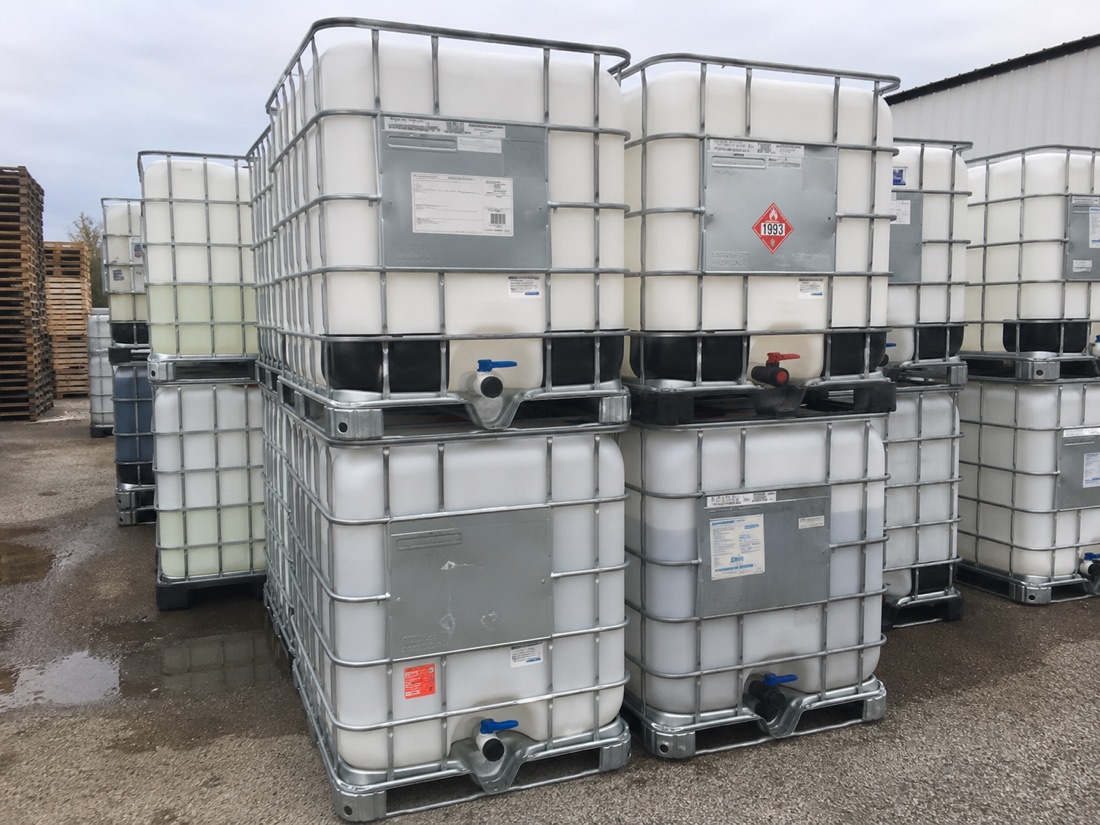
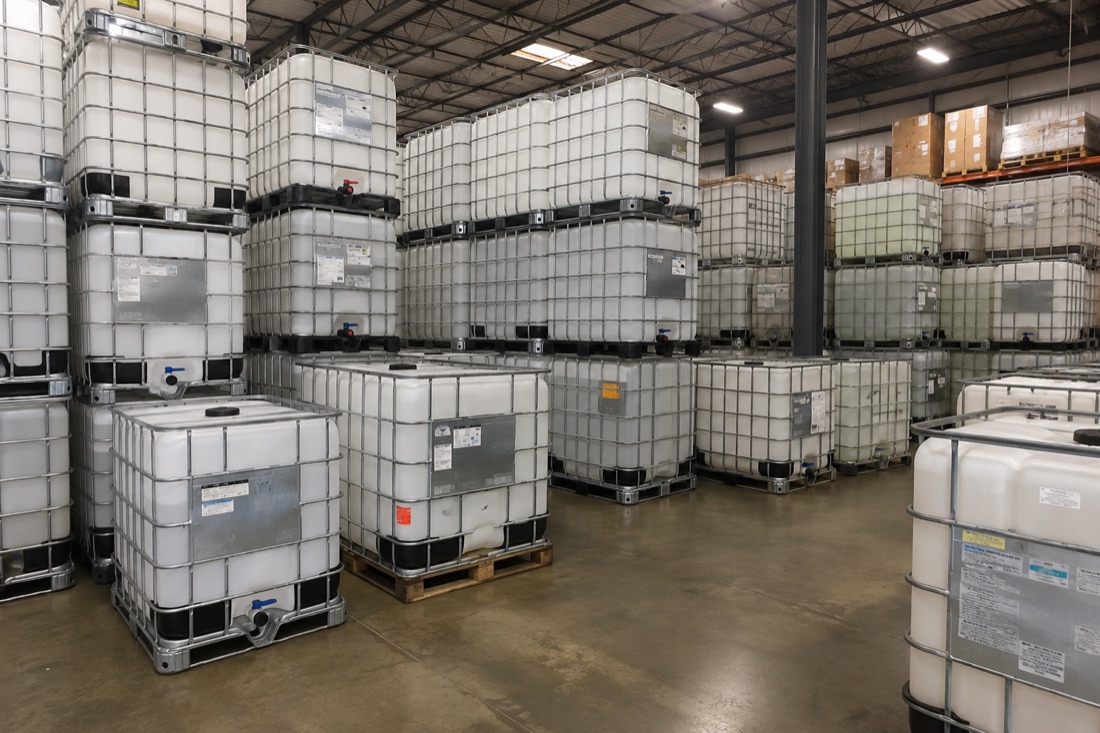
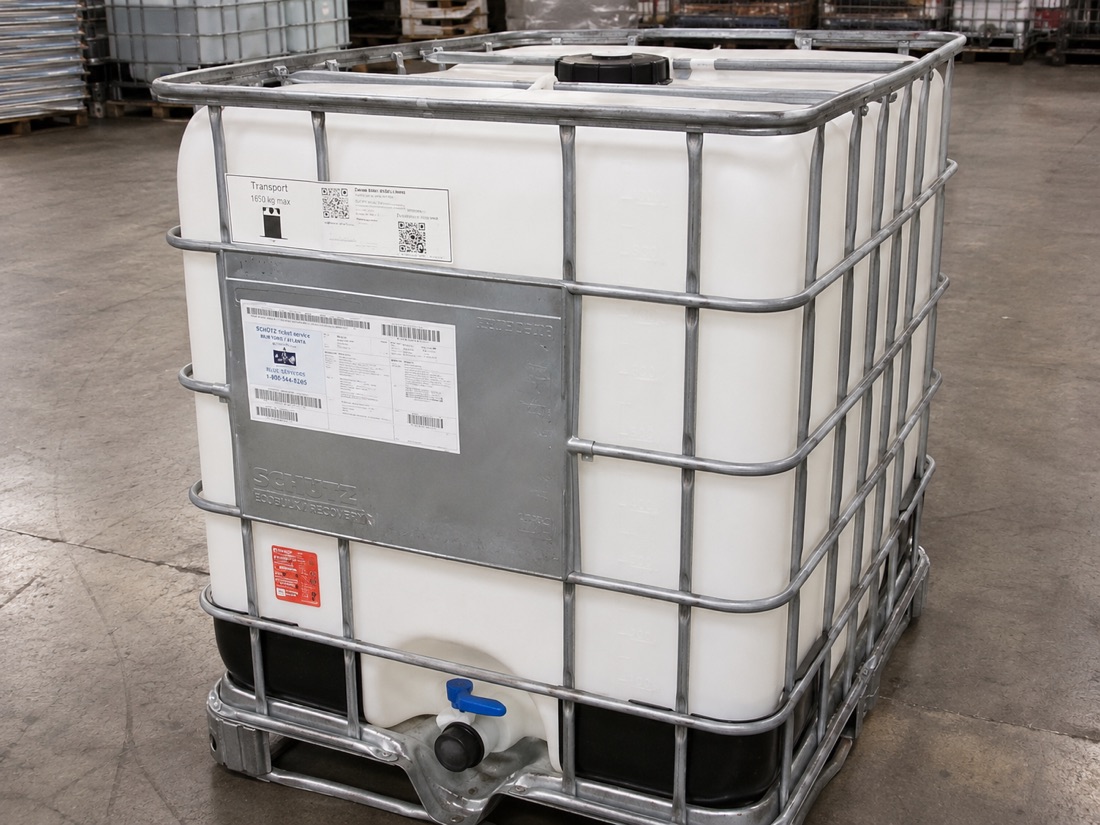
The most common type by far is the rigid composite IBC: a translucent high-density polyethylene (HDPE) bottle cradled inside a welded steel cage, mounted on a pallet, with a discharge valve at the bottom and a fill port on top. That single design handles the overwhelming majority of the water, chemicals, food ingredients, fuels, and additives that move through American industry every day. Metal IBCs (carbon or stainless steel) and flexible IBCs (bulk bags) exist too, but when someone says "IBC tote" they almost always mean the caged composite version.
An IBC is designed to be reusable. Unlike a cardboard box or a shrink-wrapped case, a properly built tote is engineered for many fill-empty-clean cycles over a service life that can span a decade. That reusability is exactly why a healthy secondary market — buying, washing, grading, and reselling used totes — exists, and it's the entire premise behind what we do here.
AnatomyThe anatomy of a composite IBC tote
A composite tote is a system of parts, and understanding each one helps you judge condition, compatibility, and value. From top to bottom:
1. The HDPE bottle
The inner vessel is blow-molded from high-density polyethylene — a tough, chemically resistant, food-safe-capable plastic. It's usually natural (translucent milky white) so you can see the fill level, though UV-stabilized black or amber bottles exist for light-sensitive contents. Wall thickness and resin grade determine how much abuse the bottle tolerates. On a reconditioned tote, the bottle is either thoroughly washed or completely swapped for a new one (a "rebottle"), which is what separates the grades.
2. The steel cage
A lattice of horizontal and vertical galvanized steel tubes surrounds the bottle, giving the soft plastic its structure. The cage is what lets you stack loaded totes, strap them for transport, and lift them with a forklift without the bottle bulging or splitting. A bent, rusted, or cracked cage is a real safety issue — see our safety guide for what to inspect.
3. The pallet base
The tote is bonded to an integrated pallet with four-way forklift access. Bases come in three flavors: steel (most durable, common on industrial totes), composite/plastic (won't rust or rot, preferred for food and pharma), and wood (cheapest, but can splinter and isn't ideal for hygienic applications). The base type affects both price and where a tote can be used.
4. The discharge valve
At the bottom front is the outlet valve — usually a 2-inch butterfly or ball valve with a threaded camlock or buttress-thread outlet. This is a wear part and a common leak point. Reconditioners routinely replace valves and gaskets, so a fresh valve is a good sign of a properly refurbished tote. Adapters let you match the outlet to your pump, hose, or fitting; we stock those under parts & accessories.
5. The fill port and cap
The top has a large-diameter fill/inspection opening (commonly 6") sealed with a screw cap that usually includes a vent or gasket. The cap keeps contents clean and contained; a missing or wrong-sized cap is another cheap thing that's easy to overlook when buying.
Rule of thumb: on a used tote, inspect the valve, the cap, and the cage welds first. The bottle's condition is graded and disclosed; the fittings are where surprises hide.
A short history of the tote
The composite IBC as we know it emerged in the 1990s, refining earlier bulk-container concepts into a standardized, stackable, forklift-ready package. The breakthrough was pairing a cheap, chemically friendly HDPE bottle with a steel cage that provided the rigidity plastic alone couldn't. That combination hit a sweet spot: far more efficient to handle than lining up five or six 55-gallon drums, far more flexible and affordable than dedicated bulk tankage.
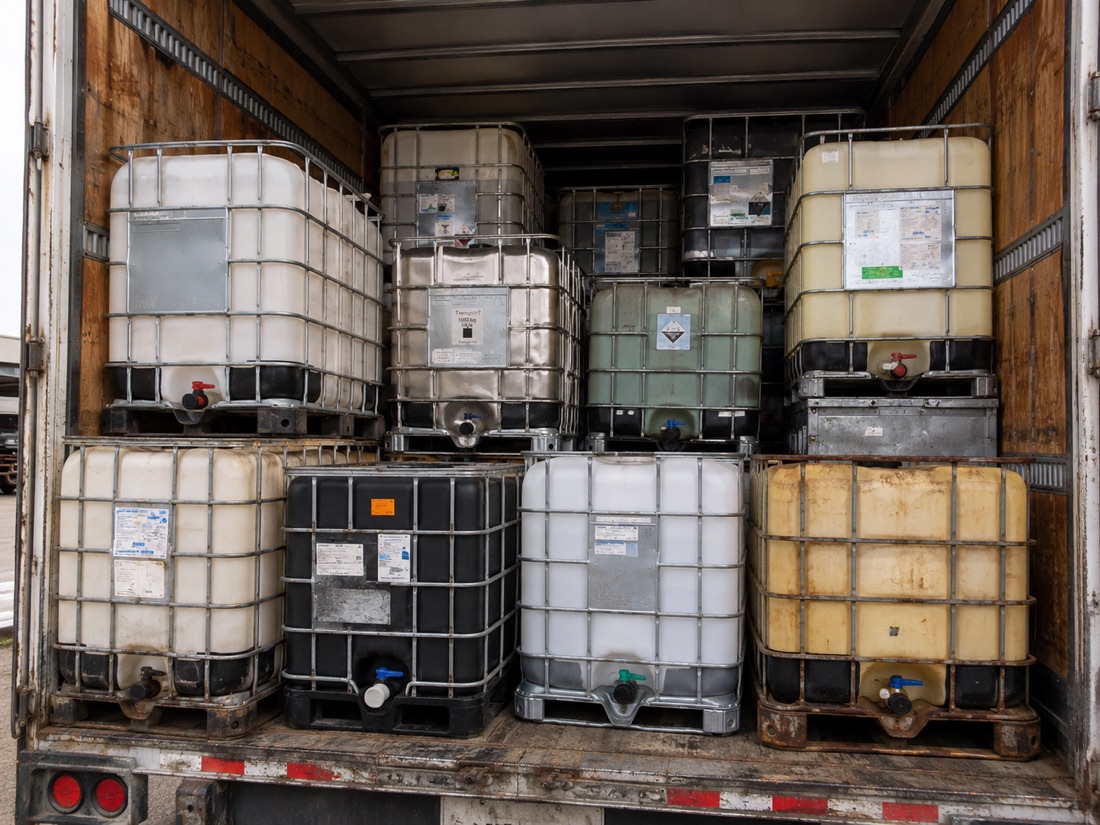
Standardization mattered too. A footprint of roughly 40" x 48" — the same as a standard GMA pallet — meant totes dropped straight into existing racking, trucks, and material-handling systems. Two totes fit neatly across a 96-inch trailer, and they stack two high loaded. Once the format locked in, it spread across virtually every liquid-handling industry, and a global reconditioning trade grew up alongside it to keep the expensive-to-make containers in service.
Sizes275 vs 330 gallon: the two sizes that rule the yard
IBCs exist from about 110 gallons up to 550, but in the United States two sizes dominate the fleet. The 275-gallon tote is the default — it's the most produced, most reconditioned, and most available. The 330-gallon tote shares nearly the same footprint but stands taller, giving you 55 more gallons per pallet position.
| Spec | 275 Gallon | 330 Gallon |
|---|---|---|
| Capacity | ~275 gal (1,040 L) | ~330 gal (1,250 L) |
| Footprint | ~40 x 48 in | ~40 x 48 in |
| Height (approx.) | ~46 in | ~53 in |
| Empty weight | ~110–125 lbs | ~135–150 lbs |
| Full weight (water) | ~2,400 lbs | ~2,900 lbs |
| Availability | Most common | Common |
Because they share a footprint, the choice usually comes down to ceiling height, doorway clearance, and how much product you want per handling event. We break the decision down in detail in 275 vs 330 Gallon IBC Totes, and full dimensions for every tote we carry live on the sizes & specs page.
Materials and tote types
Not every IBC is a plastic-and-steel composite. Knowing the family tree helps you match a container to a job:
- Composite (caged) IBC — HDPE bottle + steel cage. The standard tote; best all-rounder for water, chemicals, and food ingredients.
- Rigid plastic IBC — molded thick-wall plastic with no separate cage. Lighter, common at smaller capacities.
- Carbon steel IBC — all-metal, for solvents, fuels, and higher-temperature or higher-pressure duty.
- Stainless steel IBC — hygienic and reusable almost indefinitely; the premium choice for food, beverage, and pharma.
- Flexible IBC (bulk bag / FIBC) — woven polypropylene bags for dry, flowable solids rather than liquids.
For most buyers, the composite tote is the right answer, and HDPE is the reason. It resists a huge range of acids, bases, salts, and water-based solutions, it's food-safe-capable, and it's light and cheap enough to make reconditioning economical. Its limits — solvents, strong oxidizers, high temperatures, and UV over long outdoor exposure — are covered in the safety & compatibility guide.
ApplicationsCommon uses by industry
Agriculture & landscaping
Liquid fertilizer, crop nutrients, irrigation and rainwater storage, and on-farm fuel. Retired totes become water tanks and rain barrels.
Food & beverage
Syrups, oils, juice concentrate, sweeteners, and brewing/winemaking liquids — always in food-grade or stainless totes with disclosed history.
Chemical & industrial
Cleaning concentrates, adhesives, coatings, water-treatment chemistry, and blending — the core of the industrial tote market.
Oil, lubricants & automotive
Motor oil, DEF, coolant, and car-wash soaps. Detailers and shops buy totes by the pallet to cut per-gallon cost.
This is only a slice — municipal water, construction, pool & spa, cannabis, and emergency preparedness all lean on totes too.
Food-grade versus industrial totes
This distinction trips up more buyers than any other. HDPE itself can be food-safe, but that does not make every HDPE tote food-safe. A tote is food-grade only when it has held nothing but food-safe products across its life and has been cleaned and certified to the appropriate standard. Prior contents are the deciding factor — a bottle that once held a solvent or an aggressive chemical can never be truthfully sold as food-grade, no matter how well it's washed.
An industrial tote is one whose history includes non-food chemicals, or whose history is unknown. It's perfectly good for chemical, agricultural, and industrial duty, and for many non-potable uses like irrigation or car-wash storage — just not for anything you or an animal will consume. When in doubt, ask for food-grade stock specifically and get the prior-contents disclosure in writing. We keep dedicated food-grade inventory; request it by name on your quote or see our tote catalog.
How to read a prior-contents label
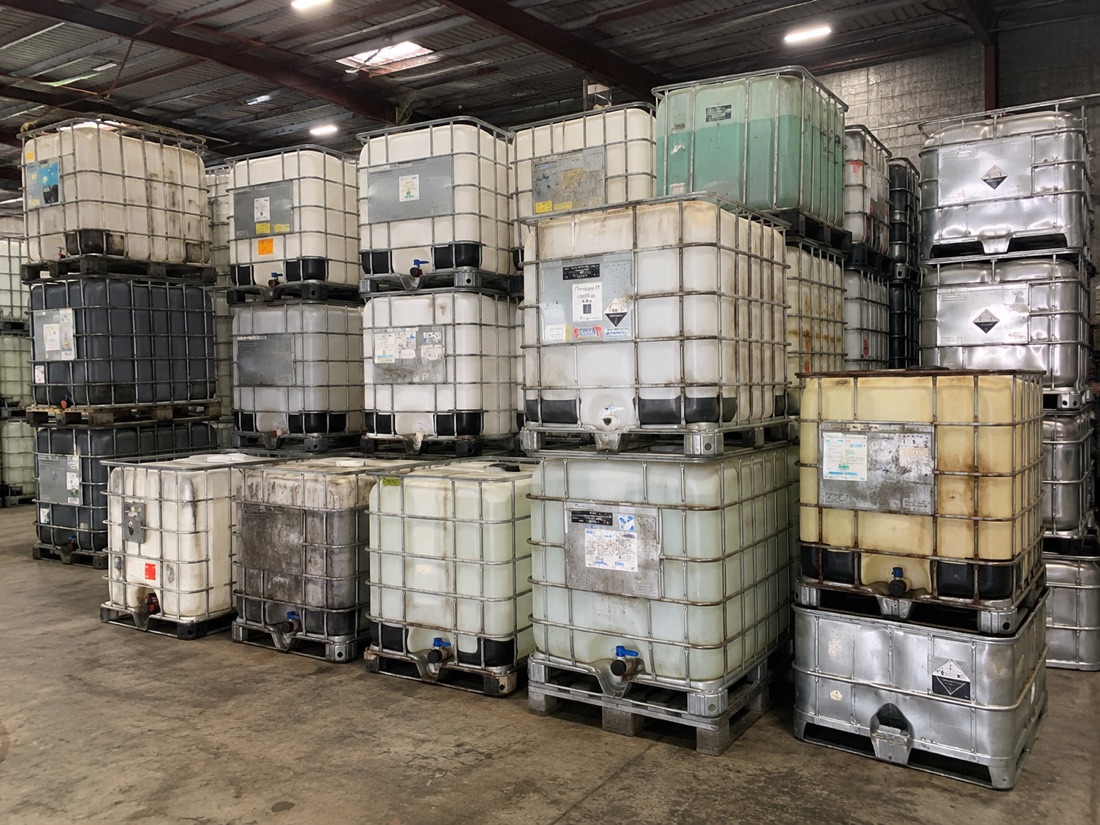
Every reputable used tote should carry information about what it held before. On a reconditioned unit you'll typically find a printed or written note of the previous product, plus stamped and molded markings on the bottle and cage. Learn to read them:
- Prior product — the single most important field. If it's blank, treat the tote as unknown/industrial only.
- UN / DOT marking — a stamped code (e.g. UN 31HA1/Y) that encodes the container type and the class of material it's certified to carry. Decoded fully in the safety guide.
- Manufacture date — the bottle is molded with a date; it tells you real age regardless of how new the cage looks.
- Rebottle / rewash stamp — indicates whether the bottle was replaced or cleaned during reconditioning, which maps to the grade.
Match those readings against your intended use. A tote that held food syrup and has a fresh rebottle stamp is a strong food-grade candidate; one with a blank prior-product field and an old bottle is fine for a gravel-yard water barrel and nothing more.
Grades & ReuseGrades, reuse & sustainability
Used totes are sold by grade — from certified food-grade, through Grade A (washed or completely rebottled), Grade B (rinsed), down to Grade C (sold as-is for repurposing). The grade tells you the cleaning level and points you to the right applications and price. We cover the full breakdown in IBC Tote Grades Explained.
Here's the part that matters beyond your budget: reusing a tote is the single greenest thing you can do with it. Manufacturing a new composite IBC burns energy and consumes virgin plastic and steel. Reconditioning an existing one uses a fraction of that energy and keeps roughly 100 lbs of material in service instead of in a landfill. Reuse beats recycling, because you skip the grinding, melting, and re-forming entirely. Curious about your own numbers? The eco calculator turns tote counts into plastic, steel, water, and CO₂e saved.
Buying & SellingBuying and selling tips
If you're buying
- Decide grade and size before you shop — it sets the price.
- Insist on prior-contents disclosure, especially for anything food, animal, or potable.
- Check that the valve, cap, and gasket are present and fresh.
- Buy by the pallet or truckload to cut per-tote freight cost.
- Confirm the UN/DOT rating if you'll ship regulated liquids.
If you're selling
- Rinse and drain empties — clean totes are worth more and easier to sell.
- Keep them out of the sun and off bare ground to protect the cage and pallet.
- Know your prior contents; buyers pay a premium for documented food history.
- Bundle quantity — a full pallet or truckload moves faster than singles.
Ready to act on either side? We sell reconditioned and new totes, we buy your empties for cash, and we haul them anywhere in the lower 48. Reconditioned stock lives at used IBC totes, and brand-new units at new IBC totes.
The tote glossary: talk like the yard
Half of buying totes is knowing the vocabulary. Vendors, drivers, and reconditioners all use shorthand, and misreading a term can cost you a wrong order. Here are the words that come up most:
| Term | What it means |
|---|---|
| Rebottle | Original HDPE bottle removed and replaced with a brand-new one inside the existing cage — creates a rebottled Grade A tote. |
| Rewash / triple wash | Original bottle cleaned in place with hot caustic and high-pressure rinsing rather than replaced. |
| Recage | Bent or corroded steel cage straightened or swapped for a sound one. |
| Prior contents | The last product the tote held — the single field that decides food-grade eligibility. |
| Composite IBC | The standard tote: HDPE bottle + welded steel cage + pallet base. |
| Rebottled vs. washed | Two routes to Grade A cleanliness — a new bottle, or a thoroughly cleaned original one. |
| Camlock / buttress | Two common outlet thread styles; adapters bridge one to the other. |
| S60x6 / DN50 | Common outlet and coarse-thread designations you'll see on valve specs. |
| Caged tote / tote tank | Synonyms for a composite IBC. |
| Reconditioned | A used tote cleaned, repaired, tested, and graded for return to service — see the process. |
Valves, outlets, caps & adapters explained
The fittings are where used-tote surprises hide, and where a little knowledge saves you a wasted trip to the hardware store. Two areas matter: the bottom outlet and the top fill port.
The bottom outlet
Most composite totes ship with a 2-inch discharge valve — usually a butterfly or ball valve — ending in a threaded outlet. The two thread families you'll meet are the coarse buttress thread (often written S60x6) and camlock-style quick connects. If your pump or hose doesn't match, you don't need a new tote — you need a cheap adapter. Common bridges include S60x6-to-garden-hose (for irrigation and rain barrels), S60x6-to-camlock (for pumps), and 2-inch NPT reducers.
The top fill port
The fill/inspection opening is typically 6 inches in diameter with a vented screw cap. The vent lets air in as you drain so the bottle doesn't collapse under vacuum, and lets pressure out as contents warm. A missing or non-vented cap is a common reason a bottle deforms — always confirm the cap is present and correct.
Buying tip: a tote with a fresh valve, a good gasket, and a vented cap is worth the small premium. Those three parts are cheap to replace but annoying to source one at a time after delivery.
What actually drives the price of a tote
Two totes that look identical can differ by more than double in price. The number on the quote is built from a handful of levers — understand them and you'll know when a deal is real:
- Grade & cleaning level — food-grade and rebottled Grade A sit at the top; as-is Grade C at the bottom.
- New vs. reconditioned — a reconditioned tote runs up to ~60% less than a factory-fresh one.
- Prior contents — documented food history commands a premium; blank history caps the ceiling.
- Quantity — per-tote price and per-tote freight both drop sharply by the pallet and truckload.
- Distance — freight is real money; delivery ZIP moves the landed cost more than most buyers expect.
- UN/DOT rating — a verified, in-date hazmat rating adds value for regulated liquids.
- Fittings — a fresh valve, sound cage, and correct cap are baked into a fair price.
The single biggest saving most buyers leave on the table is grade inflation — paying for food-grade when a Grade B rain-barrel tote would do. Buy the lowest grade that still meets the job. When you're ready, request a live quote or run the eco calculator to see the savings that never show up on the invoice.
Should you buy new or reconditioned?
For most jobs a reconditioned tote is the smarter buy — cheaper, greener, and functionally identical. New totes earn their premium only in a handful of specific cases. Here's the honest split:
Choose reconditioned when…
- Cost matters and the application is non-critical
- You want the lowest embodied footprint per tote
- Water, irrigation, cleaning, or general industrial storage
- You need volume fast — reconditioned stock is deep
- You want a rebottled Grade A: new interior, used-tote price
Choose new when…
- Zero prior history is a hard requirement
- Regulated hazmat needing a pristine, first-use UN rating
- Some pharma, cosmetic, or sensitive food processes
- Long-term outdoor duty (UV-stabilized bottle from factory)
- You want maximum service life ahead of the tote
Browse both: reconditioned IBC totes and new IBC totes. When you're on the fence, tell us the end use and we'll steer you to the cheaper option that still meets your requirements.
Why a reused tote is the greenest container you can buy
A composite IBC is roughly 100 lbs of virgin-quality material — HDPE from petroleum feedstock and galvanized steel from mined ore, both energy-intensive to produce. Build a tote from scratch and you pay that carbon and resource bill in full. Keep an existing one in service and you skip almost all of it.
That's the entire logic of the waste hierarchy: reduce, reuse, recycle, in that order. Reuse beats recycling because recycling still means grinding, melting, and re-forming — energy spent, and material quality lost each cycle. Reconditioning keeps the tote whole and simply returns it to work, preserving nearly all the embodied energy already invested. That's why every reconditioned tote we ship represents about 90% less energy than a new one and keeps ~100 lbs out of a landfill.
Want the numbers for your own volume? The eco calculator turns a tote count into plastic, steel, water, and CO₂e saved, and our sustainability method lays out how the loop closes.
How to store and maintain a tote so it lasts
A tote that's abused in the yard loses value fast; one that's cared for stays sellable and safe for years. The rules are simple and mostly free:
Keep it off the sun and off the ground
UV slowly degrades unstabilized HDPE and encourages algae in translucent bottles, so shade or cover totes stored outdoors. Keep the pallet off bare, wet ground to protect wood bases from rot and steel from rust.
Rinse before storage
An empty that's drained and rinsed before it sits is worth more, safer to handle, and far easier to recondition or resell. Dried-on residue is the enemy of resale value.
Respect the temperature window
HDPE is happiest well below its softening point — roughly up to ~120°F for extended storage. Hot liquids and hot yards both shorten a bottle's life; light-sensitive or hot contents belong in UV-stabilized black bottles.
Never stack on a bad cage
The steel cage carries the stacking load, not the plastic. Two loaded composite totes high is the general limit, and only on sound, undamaged cages on level ground. The full checklist lives in the safety guide.
IBC tote FAQ
How many gallons is a standard IBC tote?
The two dominant U.S. sizes are 275 gallons (~1,040 L) and 330 gallons (~1,250 L). Both share the same ~40x48 in pallet footprint; the 330 just stands taller. Totes exist from about 110 up to 550 gallons, but 275 and 330 make up almost the entire fleet. Compare them in 275 vs 330 Gallon.
How much does an empty IBC tote weigh?
A composite 275 runs roughly 110–125 lbs empty and a 330 about 135–150 lbs, depending on the pallet base (steel is heaviest, plastic and wood lighter). Filled with water, a 275 weighs about 2,400 lbs and a 330 about 2,900 lbs.
What size is the outlet valve and fill cap?
The bottom discharge is usually a 2-inch valve with a coarse-thread (often S60x6) or camlock outlet; the top fill port is commonly 6 inches with a vented screw cap. Adapters bridge almost any pump, hose, or fitting — see parts & accessories.
How long does an IBC tote last?
A well-built composite tote is engineered for many years and dozens of fill-empty-clean cycles. Reconditioning adds 5+ more years of service to a used tote. UN/DOT-rated totes carry retest dates for regulated transport, which is separate from general storage service life.
Can I put drinking water in a used IBC tote?
Only if it's a genuine food-grade tote — one that held nothing but food-safe products across its life and was cleaned and certified. Never use an industrial or unknown-history tote for potable water. Ask for food-grade stock by name; details in the grades guide.
Do you buy used totes as well as sell them?
Yes — buying, selling, reconditioning, and hauling are the four parts of our loop. We pay cash for clean, drained empties with documented prior contents. See how selling works.
Related guides & next steps
Grades Explained
Food Grade, A, B, and C — cleaning level, prior use, and price for each.
Compare grades →Safety & Compliance
UN/DOT markings, HDPE compatibility, grounding, stacking, and inspection.
Stay compliant →How Totes Are Reconditioned
The nine-step loop from intake dock to finished, graded, ready-to-ship tote.
See the process →IBC Tote FAQ
Straight answers on pricing, food-grade stock, shipping, and selling empties.
Get answers →Sizes & Specs
Exact dimensions and weights for every tote we carry, side by side.
View the chart →Browse the Catalog
Reconditioned, new, food-grade, accessories, and upcycled goods.
Shop totes →Now you know totes. Let's move some.
Tell us the grade, size, and quantity you need — or the empties you want gone. One form, one business day.