275 vs 330 Gallon IBC Totes: Which Size Should You Choose?
These two sizes make up almost the entire U.S. tote fleet. They share the same pallet footprint, so the decision comes down to height, weight, and how much product you want per handling event. Here's the side-by-side.
Get Your Free Quote
Buying, selling, or just curious what your totes are worth? Tell us what you need — we reply within one business day.
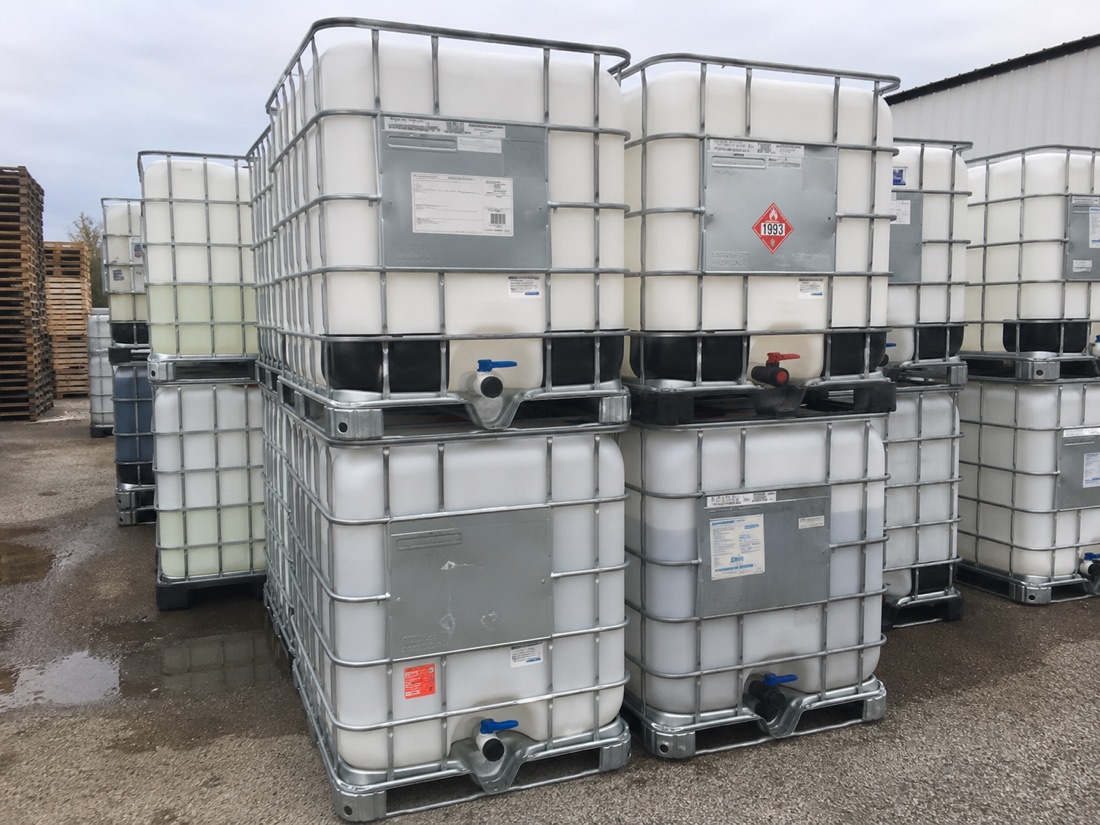
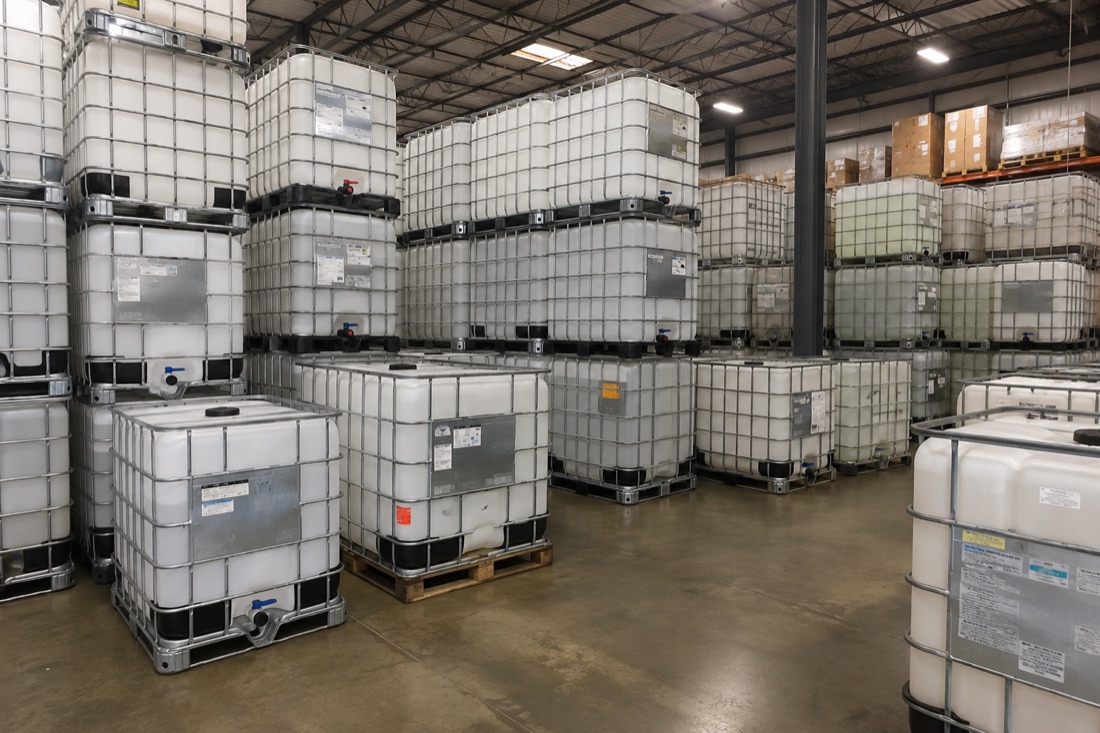
If you've shopped for IBC totes, you've seen two numbers over and over: 275 and 330. They're the two dominant sizes in North America, and because they share a standard pallet footprint of roughly 40 by 48 inches, they slot into the same racks, trucks, and material-handling systems. That's good news — it means the choice is genuinely about your operation, not about compatibility. Let's settle it.
The numbers, side by side
| Spec | 275 Gallon | 330 Gallon |
|---|---|---|
| Capacity | ~275 gal (1,040 L) | ~330 gal (1,250 L) |
| Footprint | ~40 x 48 in | ~40 x 48 in |
| Height (approx.) | ~46 in | ~53 in |
| Empty weight | ~110–125 lbs | ~135–150 lbs |
| Full weight (water) | ~2,400 lbs | ~2,900 lbs |
| Gallons per pallet position | 275 | 330 (+20%) |
| Availability | Most common | Common |
Figures are typical for composite totes and vary slightly by manufacturer. See the full sizes & specs chart for exact dimensions on the units we carry.
Same footprint, different height
The headline difference is height. A 330 stands about seven inches taller than a 275 to fit the extra 55 gallons over the same base. That sounds trivial until you're threading totes through a standard doorway, under a mezzanine, or into a box truck with limited interior clearance. Measure your tightest constraint — doorway, roll-up door, ceiling, or racking beam height — before you commit to 330s.
Weight and handling
A full 330 of water pushes about 2,900 lbs versus roughly 2,400 for a 275. Both are well within the capacity of a standard forklift, but the extra 500 lbs matters for pallet-jack moves, mezzanine floor loading, and how high you can safely stack. If your team hand-jacks totes across a warehouse, the lighter 275 is easier to live with.
Density per pallet position
Where the 330 shines is throughput. Every pallet slot in your warehouse and every position on a truck holds 20% more product in a 330 than a 275. If you move a lot of liquid and floor space or freight cost is your bottleneck, that density adds up fast. A truckload of 330s delivers meaningfully more gallons than the same count of 275s.
When to choose the 275
- Tight doorways, low ceilings, or height-limited racking
- Frequent manual/pallet-jack handling
- You want the most available, easiest-to-source size
- Standard co-packing lines built around the 275
- Reselling or repurposing — 275s move fastest on the secondary market
When to choose the 330
- You want more gallons per pallet position and per truck
- Floor space or freight cost is your constraint
- Ceiling and doorway clearance are not an issue
- Fewer handling events per volume of product is a priority
The bottom line
Pick the 275 when space is tight, handling is manual, or availability matters most — it's the safe default. Pick the 330 when you have the clearance and want to squeeze more product into every pallet slot and truckload. Most operations run one or the other fleet-wide for consistency; if you're unsure, we can look at your space and volume and recommend.
Both sizes are available reconditioned, food-grade, and new. Browse used totes, get the specs on the sizes page, or read the complete IBC tote guide for the full picture.
Freight math: gallons per truckload
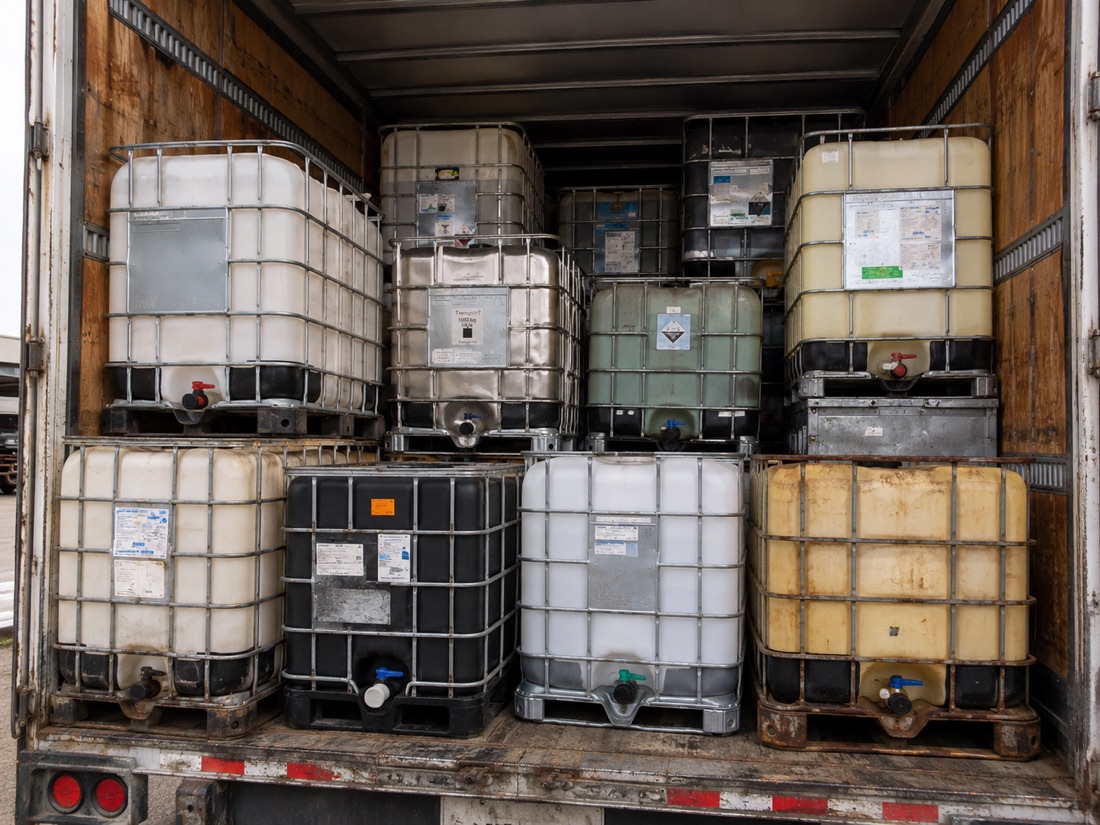
This is where the 20% capacity gap turns into real dollars. A standard 53-foot dry van holds roughly the same number of totes either way — about 40 to 48 stacked two high — because both sizes share the 40x48 footprint and both stack two loaded totes high. But each 330 carries 55 more gallons than a 275, so the same truckload delivers meaningfully more product.
| Per full truckload (~44 totes) | 275 Gallon | 330 Gallon |
|---|---|---|
| Totes on the truck | ~44 | ~44 |
| Gallons delivered | ~12,100 | ~14,520 |
| Extra gallons per load | — | +2,420 |
| Freight cost per gallon | Higher | ~17% lower |
Illustrative figures; actual counts depend on tote height, weight limits, and trailer. If freight cost per gallon is your metric, the 330 wins on a full-truckload basis — provided you have the clearance to handle them. We arrange both through transportation.
Rule of thumb: below the ceiling, choose by handling — pick the 275 if space and manual moves dominate. Above a full truckload, choose by throughput — the 330 lowers your cost per delivered gallon.
Availability & the secondary market
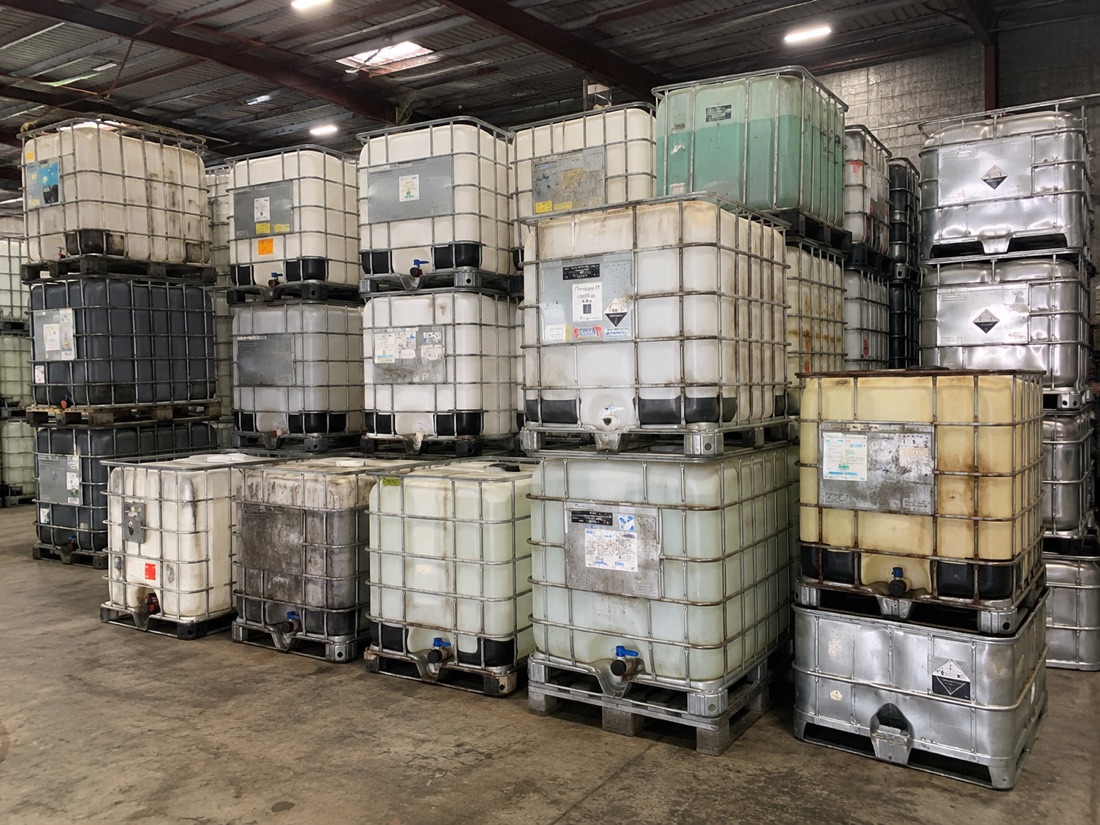
One factor buyers overlook: the 275 is simply more abundant. It's the most-produced and most-reconditioned size in North America, so reconditioned 275 stock is deeper and easier to source in a hurry, especially food-grade. The 330 is common too, but if you need a large lot on short notice, 275s usually fill faster. It also matters on the exit: if you plan to resell or upcycle later, 275s move fastest on the secondary market.
Fitting your space: a quick clearance check
Before you commit to 330s, measure your tightest constraint against the tote's ~53-inch height plus whatever you need to lift it. Common pinch points:
- Doorways & roll-up doors — a forklift lifts the tote several inches; add that to the 53".
- Mezzanine & racking beams — beam height sets whether 330s fit the slot at all.
- Box-truck interiors — limited interior height often rules out 330s for local delivery routes.
- Floor loading — a full 330 (~2,900 lbs) loads a mezzanine or trailer floor harder than a 275.
If any of those is tight, the 275 removes the guesswork. Exact heights and weights for every unit we carry are on the sizes & specs page.
The eco angle: bigger tote, fewer handling events
There's a quiet sustainability benefit to the 330 worth naming: moving the same volume of liquid in fewer, larger containers means fewer handling events, fewer pallets, and slightly less freight energy per gallon. But the far bigger environmental lever isn't the size at all — it's whether the tote is reused. A reconditioned 275 beats a brand-new 330 on footprint every time, because reuse keeps ~100 lbs of material in service and skips roughly 90% of the energy of building new. Pick the size for your operation; buy it reconditioned for the planet. Run your own numbers in the eco calculator.
275 vs 330 FAQ
Do 275 and 330 gallon totes use the same pallet footprint?
Yes — both are built on the standard ~40x48 inch footprint, so they drop into the same racks, trucks, and material-handling systems. The 330 just stands about seven inches taller to hold the extra 55 gallons.
Which size is easier to find reconditioned?
The 275 is the most-produced and most-reconditioned size in North America, so reconditioned 275 stock is generally deeper and quicker to source, especially food-grade. The 330 is common but the 275 usually fills large orders faster.
Can I stack 275 and 330 totes together?
It's best to stack like sizes on like sizes so the cage frames bear evenly. Mixing heights makes uneven, less stable stacks. Whatever you stack, keep it to two loaded totes high on sound cages — see the safety guide.
Does the 330 cost more than the 275?
Slightly, since it uses more material, but per gallon of capacity the 330 can be the better value on a full truckload thanks to lower freight per gallon. Grade, quantity, and distance move the price more than size does — request a live quote.
Know your size? Get a quote.
Tell us 275 or 330, the grade, and the quantity — we'll price it and ship it anywhere in the lower 48.