IBC Tote Grades Explained
Used totes are priced by grade, and the grade tells you two things: how thoroughly it was cleaned and what it can safely be used for. From certified food-grade down to as-is Grade C, here is exactly what each level means and how to choose.
Get Your Free Quote
Buying, selling, or just curious what your totes are worth? Tell us what you need — we reply within one business day.
Grade = cleaning level + allowed use
Think of grade as a ladder. At the top, food-grade totes are pristine and certified for edible and potable products. At the bottom, Grade C is sold exactly as it arrived, perfect for a rain barrel or a project. Everything in between trades cleanliness for cost. Buy the lowest grade that still meets your job's requirements — no more, no less.
| Grade | Cleaning | Typical prior use | Best applications | Relative price |
|---|---|---|---|---|
| Food Grade | Washed & certified; held only food-safe products its entire life | Syrups, edible oils, juice concentrate, sweeteners, vinegar | Food & beverage, brewing, winemaking, potable water, animal-safe uses | $$$$ (highest) |
| Grade A — Rebottled | Brand-new HDPE bottle on an inspected cage & base | Bottle is new; original cage previously held non-hazardous product | When you need like-new cleanliness at less than new-tote price | $$$ |
| Grade A — Washed | Triple caustic/pressure wash of original bottle; leak-tested | Water-based, non-hazardous industrial products | General industrial, cleaning concentrates, water treatment, storage | $$$ |
| Grade B — Rinsed | Rinsed and drained; not a full caustic wash | Non-hazardous residue may remain; disclosed prior product | Non-potable irrigation, dust control, wash-down, secondary storage | $$ |
| Grade C — As-Is | None; sold in the condition received | Varies; may have cosmetic damage or residue | Repurposing, upcycling, ballast, projects where cleanliness is not critical | $ (lowest) |
Price tiers are relative, not fixed quotes. Actual pricing depends on grade, size, quantity, prior contents, and delivery distance — request a live quote.
What each grade really means
Food Grade
A food-grade tote has held only food-safe products across its entire life and has been washed and certified for edible or potable use. Prior history is the gatekeeper here — no amount of cleaning turns a former chemical tote into a food-grade one. Demand food-grade explicitly and get the prior-contents disclosure in writing. This is the tote for syrup, oil, brewing, winemaking, and drinking-water storage.
Grade A
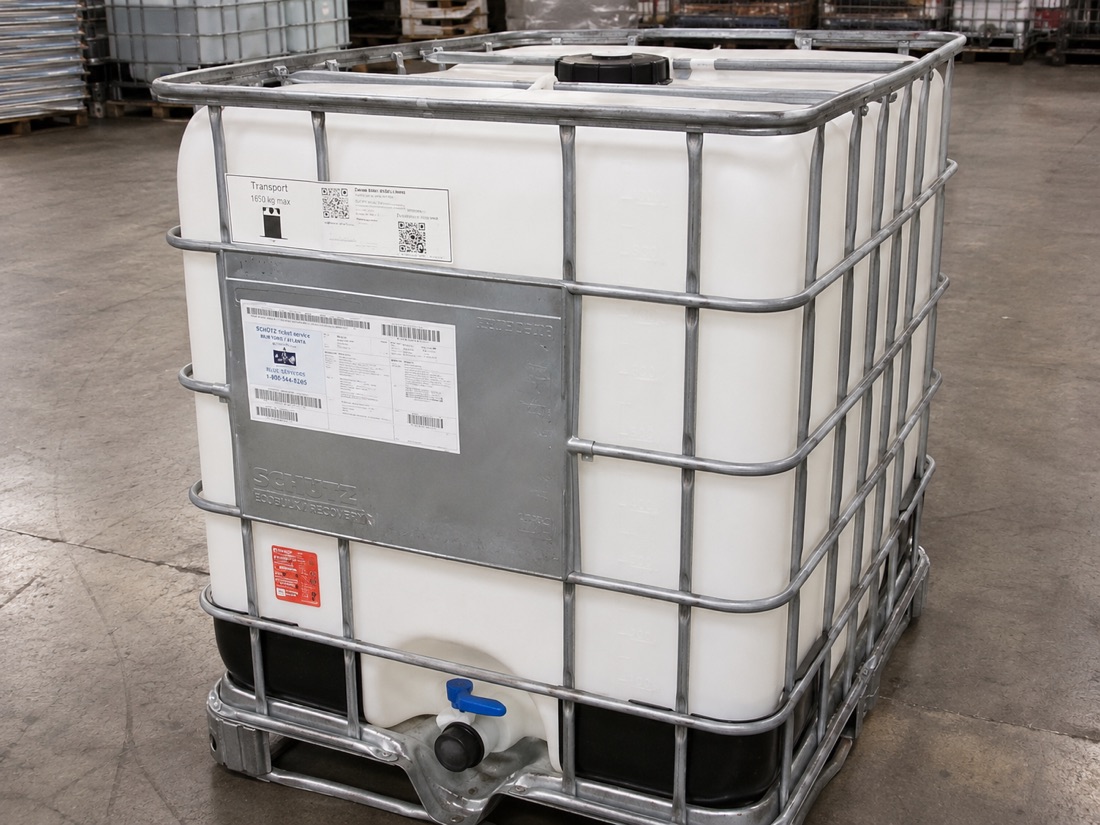
Grade A comes two ways. Rebottled totes get a brand-new HDPE bottle dropped into an inspected cage and base — as clean as new inside, at a lower price. Washed Grade A keeps the original bottle after a triple caustic and high-pressure wash plus a leak test. Both are the go-to for general industrial, cleaning, and storage duty where you want confidence but don't need food certification.
Grade B — Rinsed
A Grade B tote has been rinsed and drained but not fully caustic washed, so some non-hazardous residue may remain. The prior product is disclosed. These are the value pick for non-potable jobs: irrigation, dust control, equipment wash-down, or secondary bulk storage where a little residue is a non-issue. Not for anything you or an animal will consume.
Grade C — As-Is
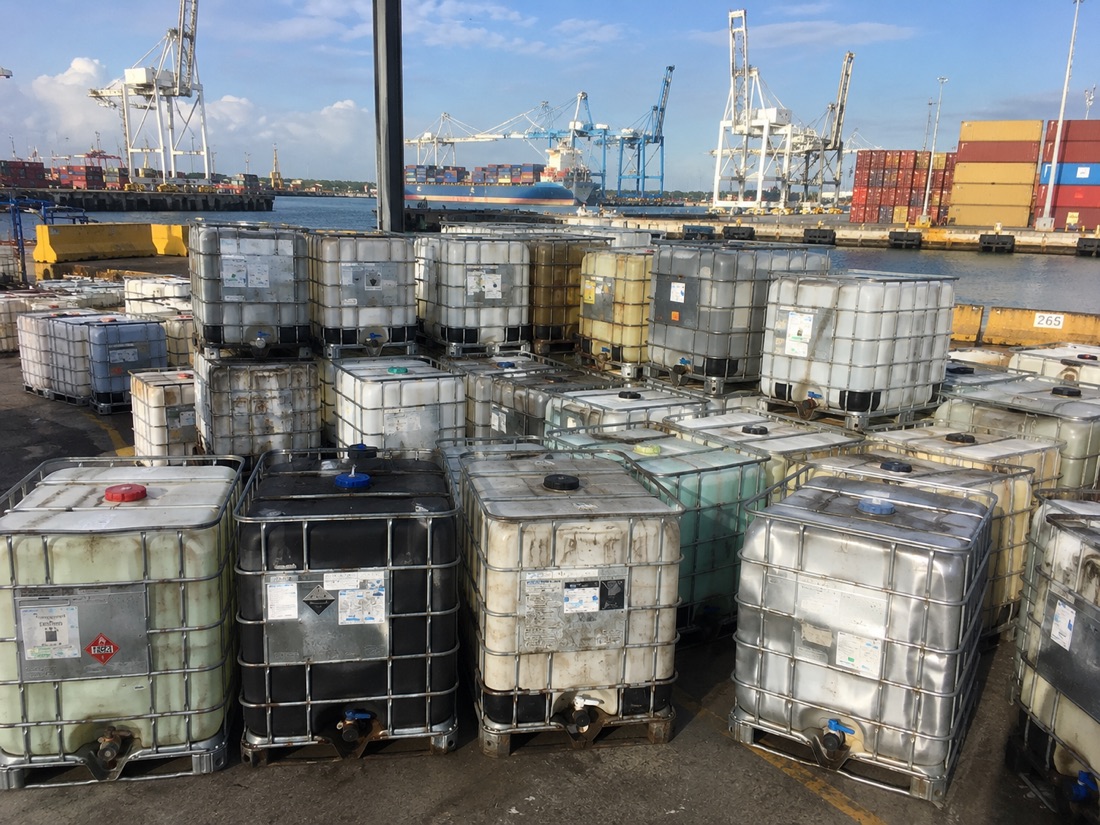
Grade C is sold in the condition received — no cleaning, sometimes cosmetic cage or bottle wear. It's the cheapest tote on the yard and the darling of the upcycling crowd: rain barrels, planters, ballast, compost tea, and countless workshop builds. If cleanliness isn't critical, Grade C is the smartest dollar you can spend. See our 27 upcycling ideas.
Which grade should you buy?
- Food, beverage, or drinking water? Food Grade, no exceptions.
- Need near-new cleanliness for industrial product? Grade A (rebottled if you want a fresh bottle).
- Storing non-hazardous, non-potable liquid on a budget? Grade B does the job.
- Building a rain barrel or a project? Grade C — cheapest and greenest.
- Not sure? Tell us the end use and we'll match the grade for you.
What "food-grade" really requires
"Food-grade" is the most misunderstood term in the tote business, and getting it wrong carries real risk. The HDPE a tote is molded from can be food-safe — but that does not make every HDPE tote food-grade. A tote qualifies only when both of these are true:
- Clean history — it held nothing but food-safe products across its entire life. One drum of solvent in its past disqualifies it permanently, no matter how well it's washed.
- Certified cleaning — it was cleaned to the appropriate food-safe standard and that cleaning is documented.
Prior contents are the gatekeeper. Plastic can absorb and slowly release traces of what it held, so washing removes surface residue but cannot reverse the history of an aggressive chemical. That's why we keep food-grade inventory physically separated from industrial stock at intake — protecting food integrity starts long before the wash line.
The one rule that never bends: if the prior-contents field is blank or non-food, the tote is not food-grade — full stop. Ask for the disclosure in writing before you buy.
Need certified stock? Ask for it by name and see our food-grade inventory. The full food-vs-industrial breakdown lives in the complete IBC tote guide.
Match the grade to the job
The cheapest correct answer is almost never the highest grade. Here is what each grade is genuinely good for so you don't overpay for cleanliness you don't need.
| Application | Recommended grade | Why |
|---|---|---|
| Drinking water & food ingredients | Food Grade | Certified clean history is legally and practically required. |
| Brewing, winemaking, syrup, edible oils | Food Grade | Anything you or an animal consumes needs documented food history. |
| Cleaning concentrates & water treatment | Grade A | Near-new cleanliness without the cost of food certification. |
| General industrial storage & blending | Grade A | Washed or rebottled interior gives confidence for sensitive product. |
| Non-potable irrigation & dust control | Grade B | A little disclosed residue is a non-issue; big savings. |
| Equipment wash-down & secondary storage | Grade B | Value workhorse for jobs where pristine isn't needed. |
| Rain barrels, planters, ballast, DIY builds | Grade C | Cheapest tote on the yard; cleanliness not critical. |
| Compost tea, greywater, projects | Grade C | As-is is perfect — see the upcycling ideas. |
Building something? 27 upcycling ideas lean heavily on Grade C.
Grade myths that cost buyers money
"A good wash makes any tote food-grade."
Fact: washing removes residue but not history. A tote that held a chemical can never be truthfully sold as food-grade. History first, cleaning second.
"Higher grade is always the safer choice."
Fact: for a rain barrel or dust control, food-grade is simply wasted money. The safe choice is the lowest grade that meets the job's actual requirement.
"Rebottled means the whole tote is new."
Fact: rebottled means a brand-new bottle in an inspected used cage and base — a like-new interior at a used-tote price, which is exactly the point.
"Grade B and Grade C are basically the same."
Fact: Grade B is rinsed and drained with disclosed contents; Grade C is sold exactly as received, sometimes with cosmetic wear. Different cleaning, different price, different jobs.
Every grade is a diversion win
Here's the part that's easy to miss: whichever grade you buy, you're keeping a tote in service instead of in a landfill. Grade C is the purest example — a tote that might otherwise be scrapped goes straight to a second life with almost zero processing. But even a rebottled Grade A saves the cage, the base, and the embodied energy of a whole new frame. Buying used at any grade is the environmentally right call.
That's the circular model in a nutshell: reduce, reuse, recycle — in that order, with reuse beating recycling every time. See the numbers for your own order in the eco calculator or read the sustainability method.
Grade FAQ
What is the difference between a washed and a rebottled Grade A tote?
A washed Grade A keeps its original bottle after a triple caustic and high-pressure wash plus a leak test. A rebottled Grade A gets a brand-new HDPE bottle dropped into the inspected used cage and base. Both are near-new inside; rebottled gives you a factory-fresh interior for the pickiest industrial jobs.
Can a Grade C tote be cleaned up to food-grade later?
No. Food-grade status depends on documented food-only history, which a Grade C tote generally doesn't have. Cleaning a Grade C tote can make it useful for many industrial or DIY jobs, but it cannot retroactively create the certified history food use requires.
Which grade is cheapest?
Grade C, sold as-is, is the cheapest tote on the yard, followed by Grade B. Food-grade and rebottled Grade A sit at the top. Buy the lowest grade that still meets your job to spend the least — request a live quote for numbers.
Do you disclose prior contents for every grade?
Yes. Prior contents are disclosed across grades, and it's the single most important field for anything food, animal, or potable. For Grade C the history may be less complete, which is exactly why Grade C is reserved for non-consumable uses.
Is a food-grade tote overkill for irrigation?
Usually, yes. Irrigation, dust control, and wash-down are classic Grade B jobs. Save food-grade for drinking water and edible products — paying the food-grade premium for a garden hose feed is money you don't need to spend.
Not sure which grade fits?
Tell us what you're storing and we'll recommend the right grade — and quote it — within one business day.