01
Rainwater harvesting
Chain totes under a downspout to bank hundreds of gallons of free water for the garden. The number-one upcycle for a reason.
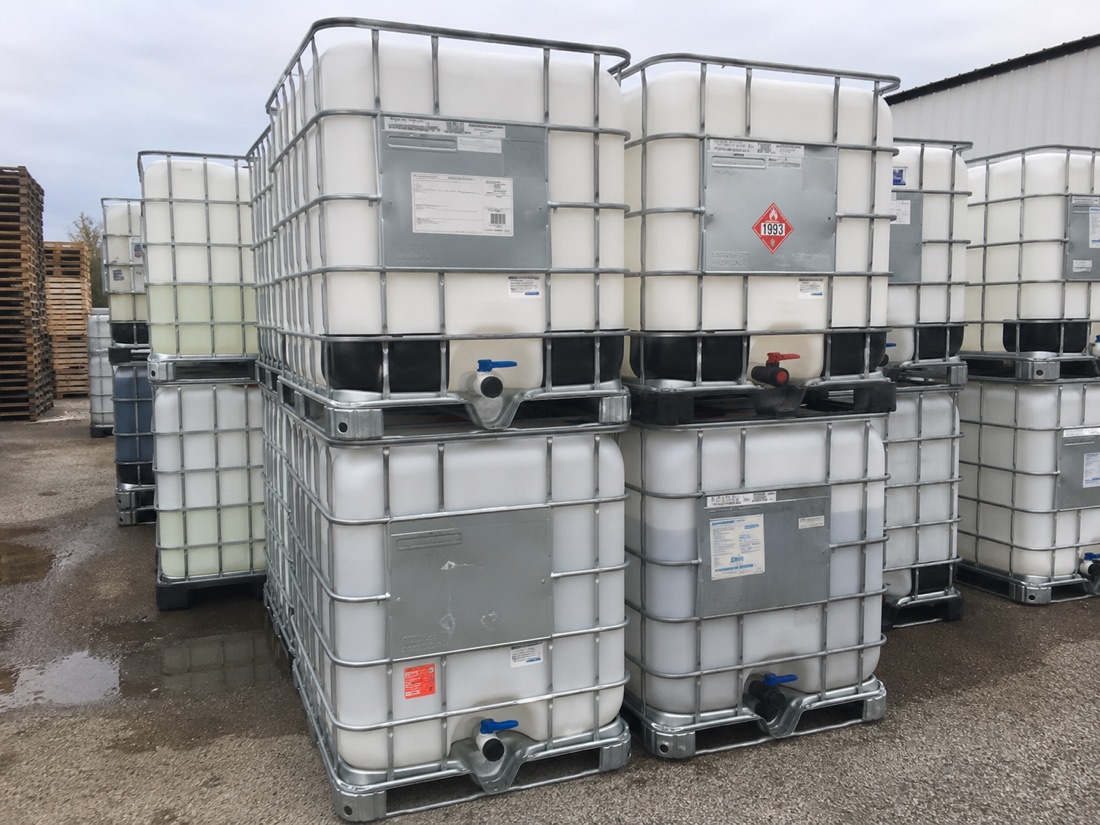
A retired tote is 100 lbs of tough HDPE and galvanized steel that's still got years left in it. Before you scrap one, look at this list — from rainwater harvesting to aquaponics to a backyard car wash, there's almost always a better second life than the landfill.
Buying, selling, or just curious what your totes are worth? Tell us what you need — we reply within one business day.
Here's the thing nobody tells you: the greenest tote is the one that never gets thrown away. Reuse sits at the very top of the waste hierarchy — above recycling, way above the dump — because it keeps all of a container's embodied energy in play. And a composite IBC is practically begging to be reused. It's watertight, stackable, forklift-ready, and cheap on the secondary market. So grab a cheap Grade C tote, a valve, maybe a pump, and get building. One quick rule before you start: anything you or an animal will drink from needs a food-grade tote with known history — check the safety guide for the rest.
Chain totes under a downspout to bank hundreds of gallons of free water for the garden. The number-one upcycle for a reason.
Gravity-feed a drip line straight from the bottom valve — no pump, no power, happy plants.
Cut the top off one tote for a fish tank and use another as a grow bed. A closed-loop food factory in your backyard.
Steep compost in water with an aquarium pump for aeration and pour out liquid gold for your soil.
A food-grade tote holds 275+ gallons of potable water for outages, wildfires, or off-grid living. Rotate it seasonally.
Halve a tote lengthwise and you have two waist-high planters — the steel cage doubles as a trellis.
A gravity trough for cattle, horses, goats, or sheep out in the field where hoses don’t reach.
Mount a gravity feeder on the frame for game management or backyard wildlife.
Bulk soap, wax, or reclaimed rinse water on tap. Detailers buy totes by the pallet to slash per-gallon cost.
For farm diesel or used-oil collection, use a compatible, properly rated and grounded tote — see safety first.
Add a valve and a foot pump for a jobsite, campground, or event handwashing setup.
A staged water reserve near the barn or shop, ready for a pump-and-hose knockdown.
Mix and store nutrient solution for a greenhouse or vertical grow at scale.
The translucent bottle plus humidity control makes a surprisingly good fruiting chamber.
Buried and vented, a tote becomes an insulated mini cellar for produce and preserves.
Capture laundry or sink water to irrigate ornamentals and cut your fresh-water draw.
Sink a cut tote for a small garden pond, koi holding tank, or bog filter.
The steel cage makes a sturdy skeleton for a coop, run, or nesting-box wall.
Beekeepers use the frame as a hive stand and the bottle for bait/swarm setups.
A cleaned tote forms the tank of an off-grid or campground composting toilet system.
Warm water on demand at the kennel, groomer, or back porch.
Fill with water or sand as a movable anchor for tents, signs, or barriers.
Strip the bottle and the cage becomes a ventilated crate for firewood, kindling, or produce.
Strap a tote to a trailer with a pump for weed control, dust suppression, or fence-line spraying.
Bulk-collect and store sap during the boil-down season in a food-grade tote.
Home and craft brewers repurpose food-grade totes for bulk liquor, must, or wort handling.
A cut tote makes a big, splash-contained basin for a shop washer or oil-change catch.
Turning a retired tote into a rain barrel or a planter isn't just a fun weekend — it's a real diversion win. Curious how much plastic, steel, water, and CO₂e your projects add up to? The eco calculator does the math live.
Open the Eco Calculator →of free rainwater a single upcycled tote can bank per fill.
The single best decision you'll make on any tote build happens before you pick up a tool: which tote to start with. Get this right and everything downstream is safer and cheaper.
| Project type | Tote to buy | Why |
|---|---|---|
| Drinking water, aquaponics fish tank, brewing | Food Grade | Anything you or an animal consumes needs documented food-only history. |
| Rainwater for the garden, irrigation, ponds | Grade B or C | Non-potable use — cheap and perfectly safe for plants. |
| Planters, ballast, firewood bins, workshop basins | Grade C | Cleanliness isn't critical; the cheapest tote on the yard wins. |
| Fuel or oil storage | Compatible & rated tote | Check HDPE compatibility, rating, and grounding first — see safety. |
| Livestock water troughs | Food Grade | Animals drink it — treat it like potable water. |
In short: food-grade for anything living things consume, Grade C for everything else. Compare all the levels in Grades Explained, and never guess on a tote's history — insist on prior-contents disclosure.
Most tote projects need surprisingly little. The container does the heavy lifting; you're mostly adding access, flow, and support. A starter kit for the common builds:
Two safety reminders before the grinder comes out: confirm the tote's prior contents are safe for your use, and never cut into a tote that held flammables without fully purging it first. When in doubt, check the safety guide.
Rainwater harvesting, drip irrigation, emergency water, greywater capture, firefighting reserve, and livestock troughs. A single tote banks 275+ gallons of free water per fill — the highest-impact upcycle for both your wallet and the watershed.
Aquaponics, hydroponic reservoirs, raised planter beds, compost tea, mushroom chambers, and root cellars. The translucent bottle and steel trellis-ready cage make totes a backyard grower's favorite raw material.
Car-wash and detailing tanks, dog-wash stations, portable wash stations, mobile spray rigs, parts washers, and firewood bins. Bulk liquid on tap plus a rugged frame equals endless jobsite utility.
Chicken-coop frames, beehive stands and swarm traps, deer feeders, pasture water, composting-toilet tanks, and sap collection. The cage alone is a ready-made structural skeleton for countless homestead builds.
It's easy to think of a backyard rain barrel as a small gesture. It's not. Every tote you upcycle is ~100 lbs of HDPE and galvanized steel that stays in service instead of getting shredded or buried — and reuse sits above recycling on the waste hierarchy precisely because it preserves all the energy already baked into the container. You skip the grinding, the melting, and the re-forming entirely.
Multiply one rain barrel by a neighborhood, a farm, or a maker community, and the diversion becomes real tonnage kept out of the landfill. Want to see what your projects add up to in plastic, steel, water, and CO₂e? The eco calculator does the math live, and the sustainability method explains how it all fits together.
For anything you or an animal will drink from — potable water, aquaponics, brewing, livestock troughs — use a certified food-grade tote. For everything else (planters, ballast, irrigation, workshop builds), a cheap as-is Grade C tote is the smart pick.
Only in a food-grade tote with documented food-only history, and with appropriate filtration and treatment for potable use. For garden and irrigation water, any grade is fine. Never use an industrial or unknown-history tote for drinking water.
Algae needs light. Block it: paint the bottle, wrap it in shade cloth, or use a UV-stabilized black bottle. Keeping the tote shaded also slows HDPE degradation from sun exposure — a win on both fronts. More in the safety guide.
Not without fully purging and cleaning it first — and never a flammable-residue tote with a grinder or torch. The safest route is to start with a clean tote of known history. If you're unsure what a tote held, treat it as unknown and use it only for non-consumable, non-cutting applications.
As-is Grade C totes are the cheapest option and ideal for most builds. We stock them alongside ready-made upcycled goods if you'd rather skip the build. Request a quote and tell us what you're making.
Not everyone has a jigsaw and a free Saturday — and that's fine. We sell ready-made upcycled goods built from retired totes: rain barrels, planters, and workshop stations, all diverting material that would otherwise be scrapped. Browse them under upcycled goods.
And if you've got tired empties gathering dust in your yard, don't sit on them — we'll buy them for cash and put them back into the loop. Want the full backstory on how a tote gets a second life? Read how IBC totes are reconditioned or start with the complete IBC tote guide.
Grab a cheap Grade C tote to build with, or a food-grade one for anything you'll drink. Tell us what you need.
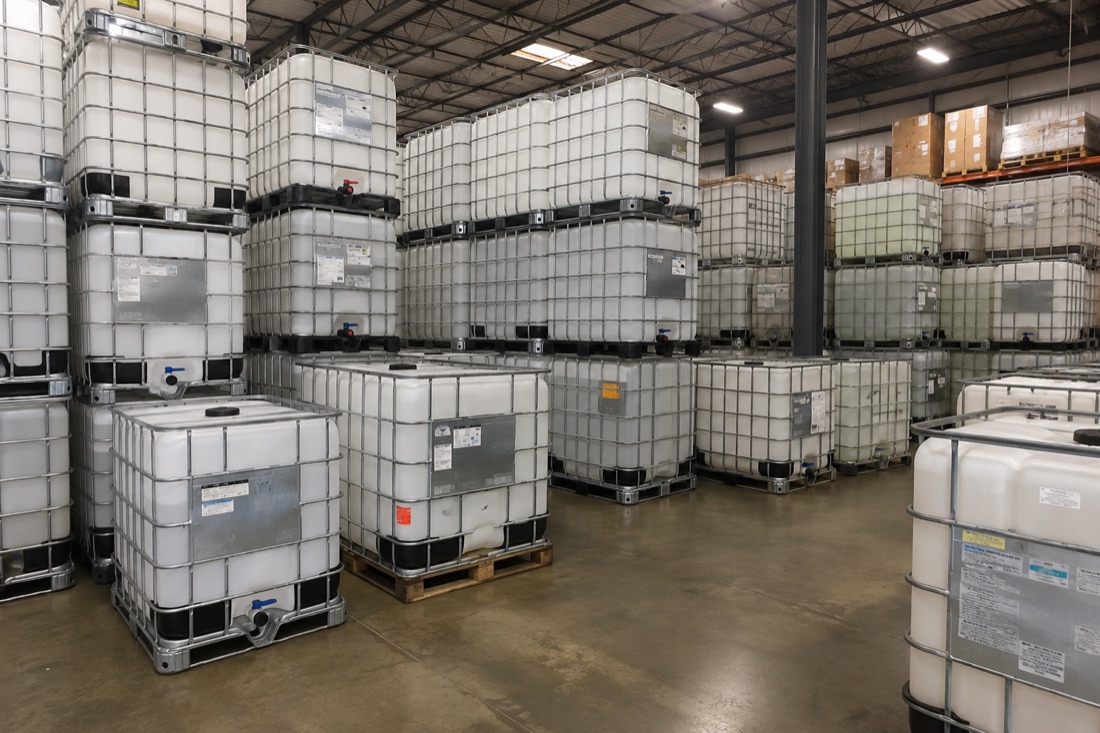
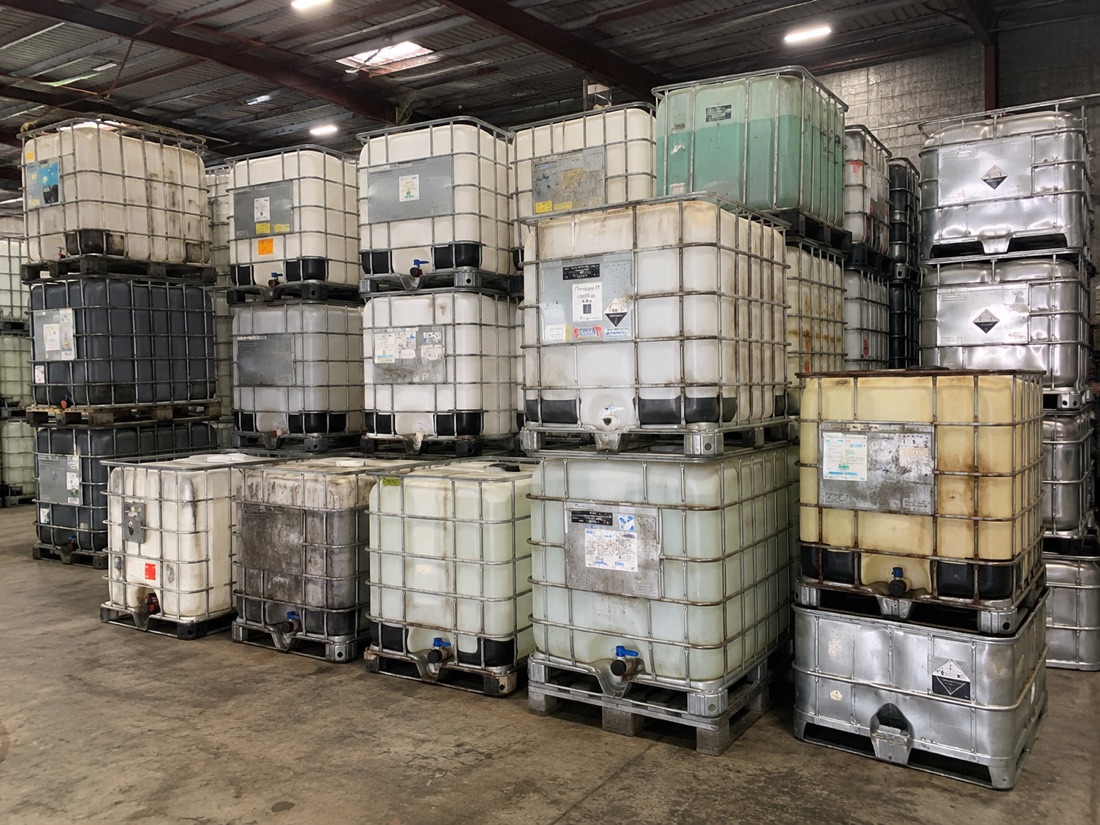
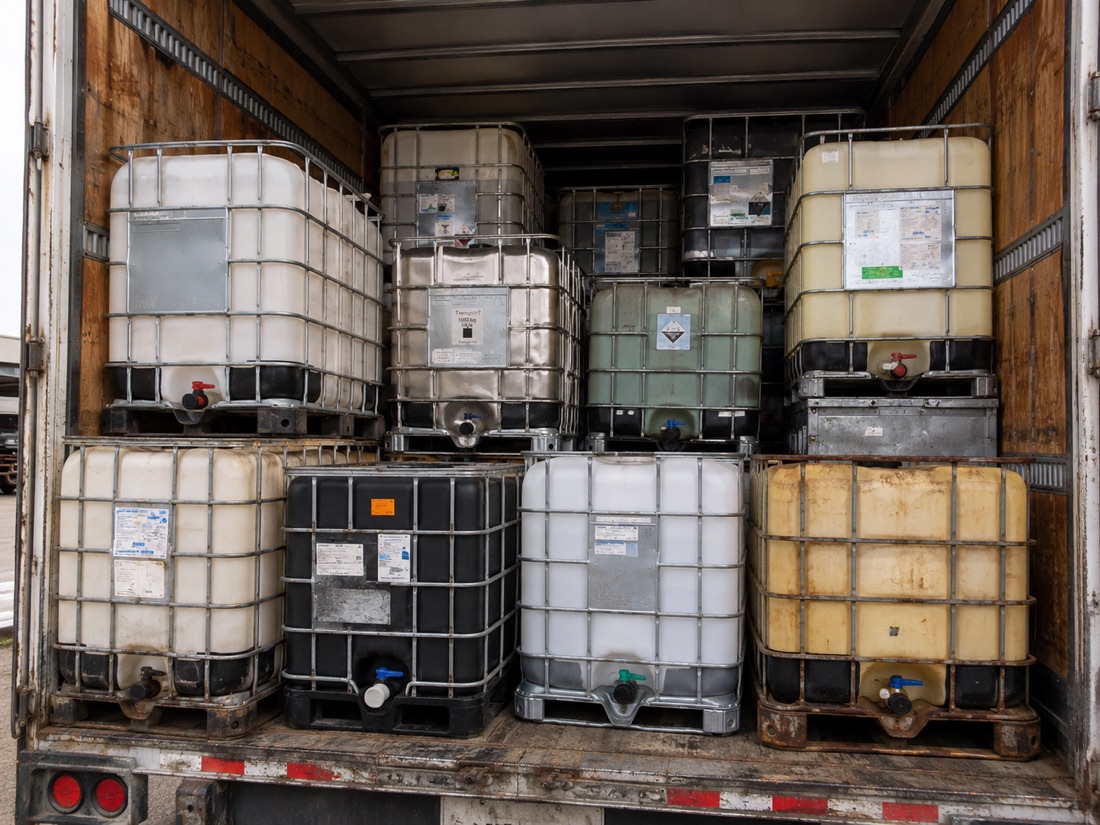
A look inside our Austin operation — buying, grading, reconditioning, and loading IBC totes for reuse across all 50 states.
One form. Buying, selling, recycling, or freight — we'll route it to the right person and reply within one business day.