Start with the right tote, or stop here
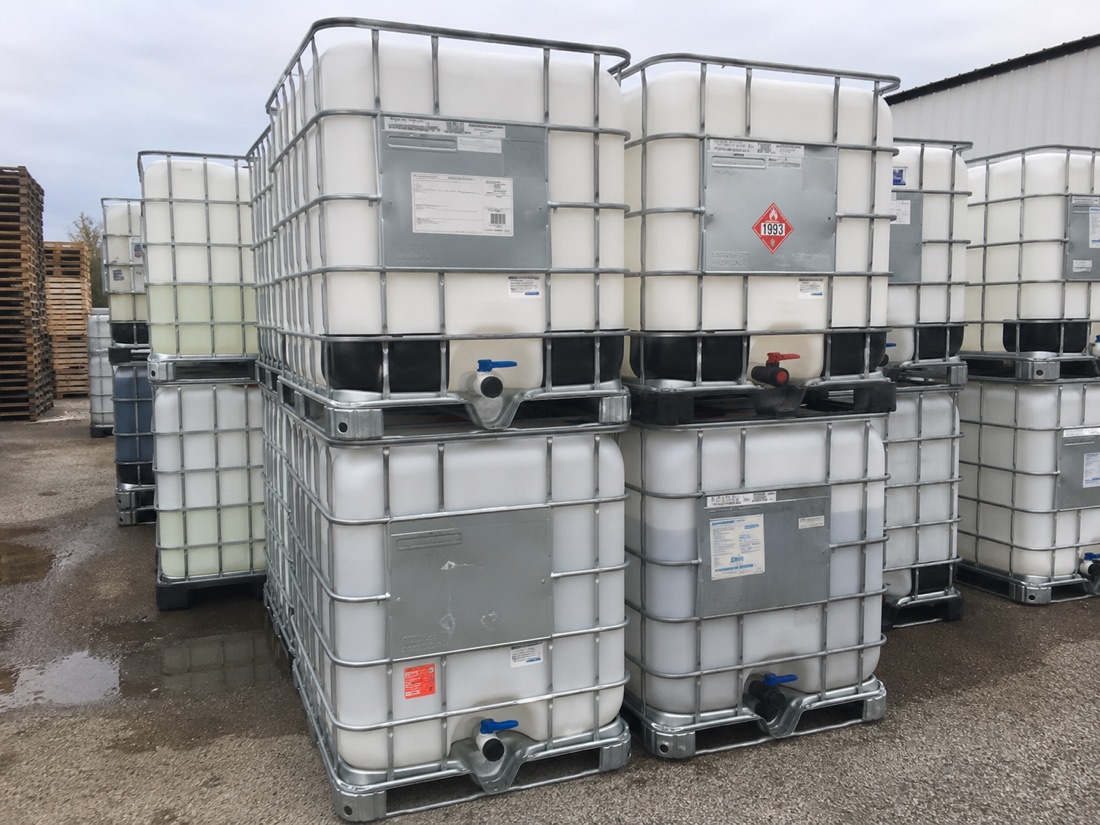
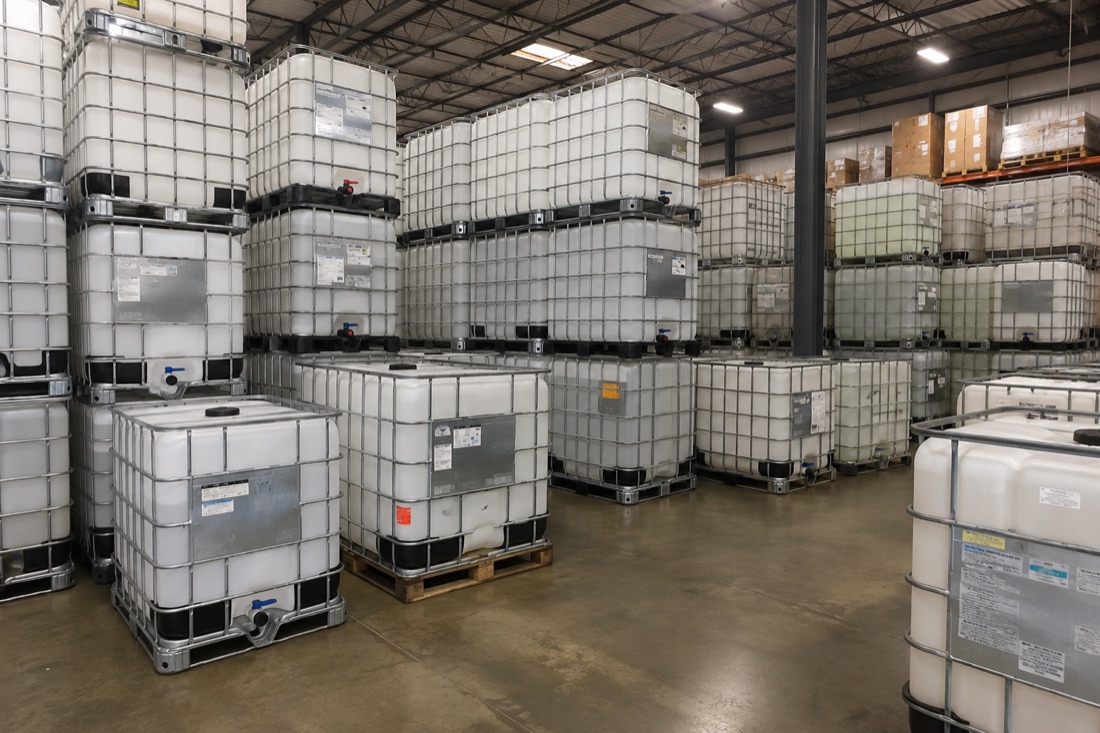
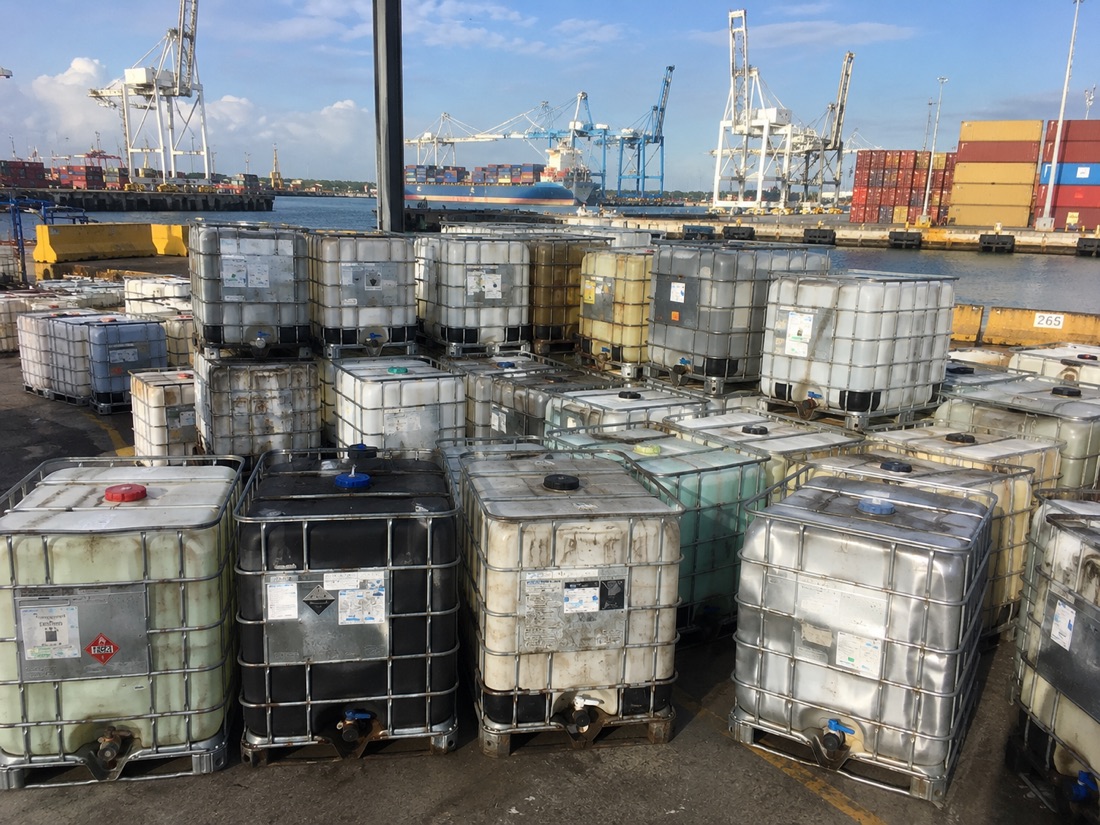
Before any cleaning conversation, one thing must be true: the tote has to be a food-grade tote that previously held a food-safe product. This is not negotiable, and no amount of scrubbing changes it.
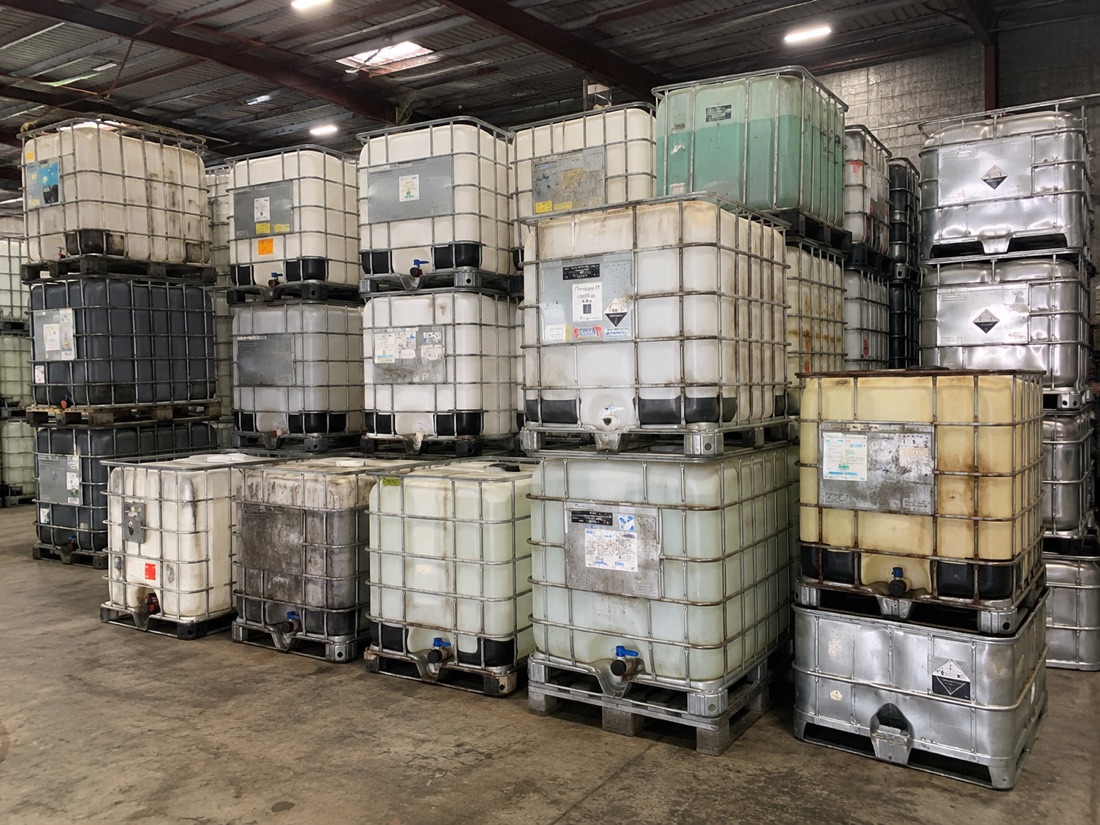
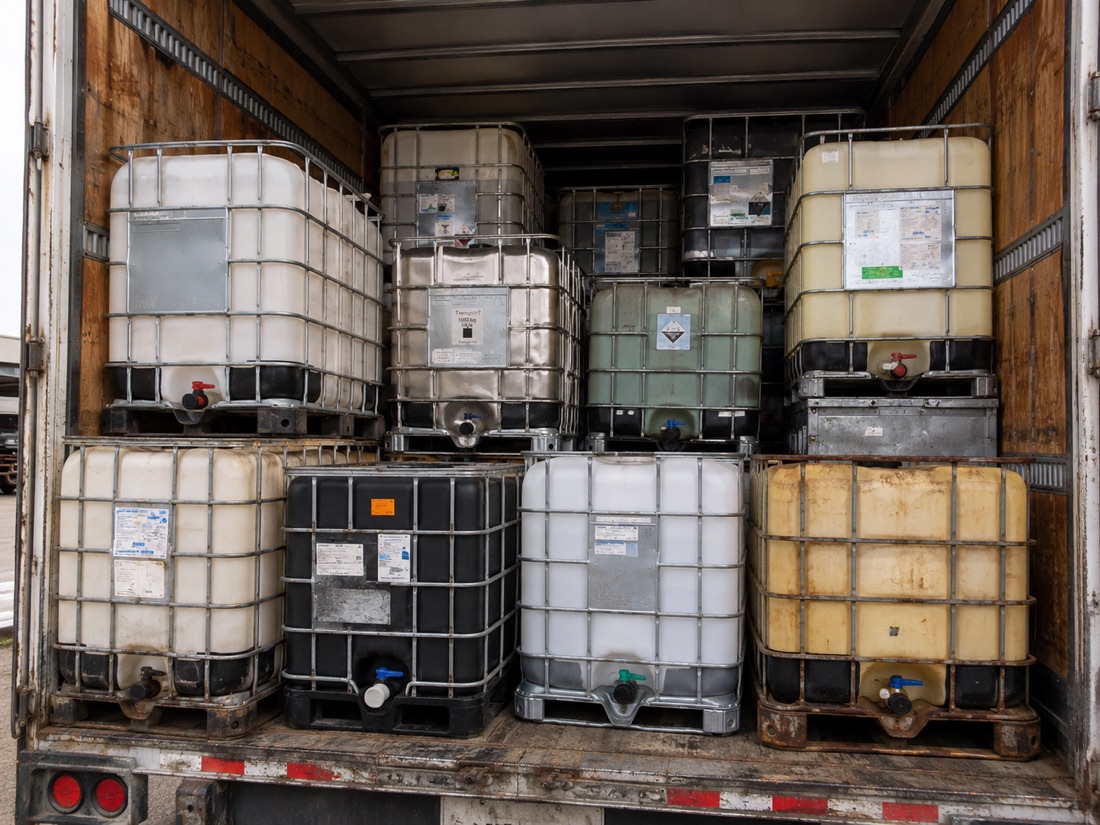
HDPE is slightly porous at the molecular level. A tote that once held a solvent, a pesticide, or an industrial chemical can retain trace residues in the plastic that cleaning will not fully remove. You cannot wash a chemical tote into a drinking-water tote. Full stop.
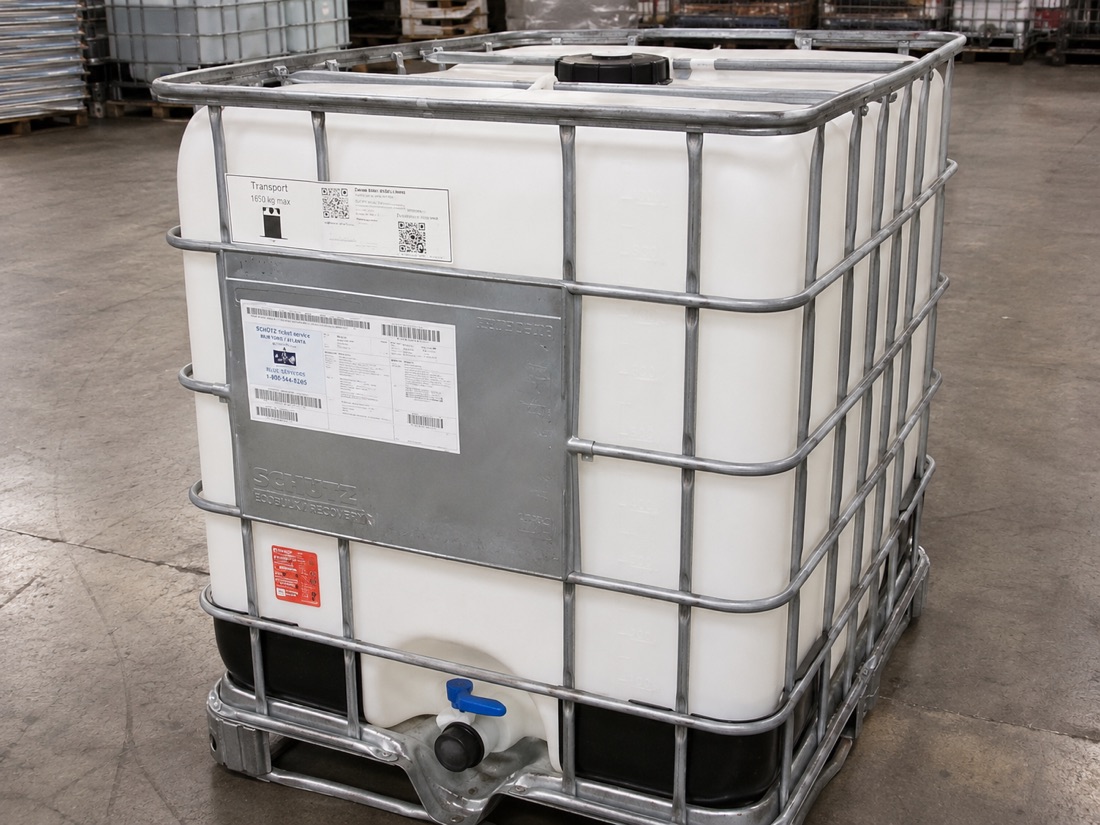
What you want is a tote with documented prior contents that were food-safe, ideally something like a food syrup, juice concentrate, or edible oil, on a clean pallet, with an intact bottle. Our food-grade reconditioned totes are sourced and labeled with exactly this use in mind, and our grades reference explains how we verify prior contents. If you cannot confirm what a tote held, do not use it for potable water. Use it for irrigation instead.
Gather your materials
- Unscented household chlorine bleach (plain sodium hypochlorite, no additives or fragrance)
- A clean hose with potable-rated fittings if possible
- A soft long-handled brush or a clean pressure wand
- Food-safe detergent, or none at all for a rinse-only approach
- Clean, dechlorinated water for the final fill
- Nitrile gloves and eye protection
Avoid scented bleaches, splash-less formulations, and anything with surfactant additives. You want the simplest chlorine source you can buy.
Step by step
1. Inspect and rinse
Open the top lid and the bottom valve. Look inside for residue, film, or odor. Rinse thoroughly with clean water, letting it flush out the bottom valve to carry debris away. Do a first pass just to remove whatever loose material is present.
2. Wash the interior
Fill the tote about one-quarter full with clean water. If using detergent, add a food-safe cleaner now. Agitate by rocking the tote or by circulating with a pump, then use a brush or wand to reach the interior walls and corners through the top opening. Drain completely through the bottom valve.
3. Rinse until clean
Rinse repeatedly with clean water until the drain water runs completely clear and free of suds and odor. This may take several fills. Do not skip this; detergent residue in drinking water is unpleasant and unnecessary.
4. Sanitize with a chlorine solution
Prepare a sanitizing solution following recognized emergency-water-storage guidance. A commonly cited approach uses a small measured amount of unscented household bleach per volume of water. Fill the tote with clean water, add the measured bleach, and mix.
The goal is a mild chlorine solution that contacts every interior surface, not a strong one. More bleach is not better; it just means more rinsing later.
Let the solution stand so it contacts all surfaces, including up around the top lid area. Some people invert or rock the tote to wet the upper interior.
5. Drain and final rinse
Drain the sanitizing solution fully. Then rinse with clean, potable water until you can no longer detect a chlorine smell. If your fill water is municipal and already chlorinated, a residual chlorine trace is normal and acceptable; you are only rinsing out the excess from the sanitizing step.
6. Fill and label
Fill with potable water. Label the tote clearly with the fill date and "POTABLE WATER" so it is never repurposed for anything else. Keep the top lid closed and the valve capped.
Maintaining potable water over time
Cleaning is only the start. Stored drinking water needs ongoing care.
| Factor | What to do |
|---|---|
| Light | Store the tote out of direct sunlight to prevent algae |
| Temperature | Keep cool; heat accelerates biological growth |
| Rotation | Refresh stored water periodically per your local guidance |
| Contact | Never connect a potable tote to a non-potable source without backflow protection |
Sunlight is the enemy of stored water. Even a food-grade tote will grow algae if translucent plastic sits in the sun. Shade it, cover it, or keep it indoors.
When not to bother
If your goal is irrigation, livestock, dust control, or fire defense, skip all of this. Any sound reconditioned tote works fine for non-potable water, and you save yourself the sourcing and sanitizing effort. Reserve the food-grade sourcing and the full sanitizing routine for water people or animals will actually drink.
And a standing reminder from our floor: potable-water preparation is one area where the tote's history matters more than the cleaning. We can wash a container beautifully, but we cannot change what soaked into the plastic in its first life. Choose the right tote and the cleaning is straightforward. Choose the wrong one and no procedure makes it safe.
If you want help sourcing a verified food-grade tote for water storage, contact us and we will match you to one with documented prior contents.