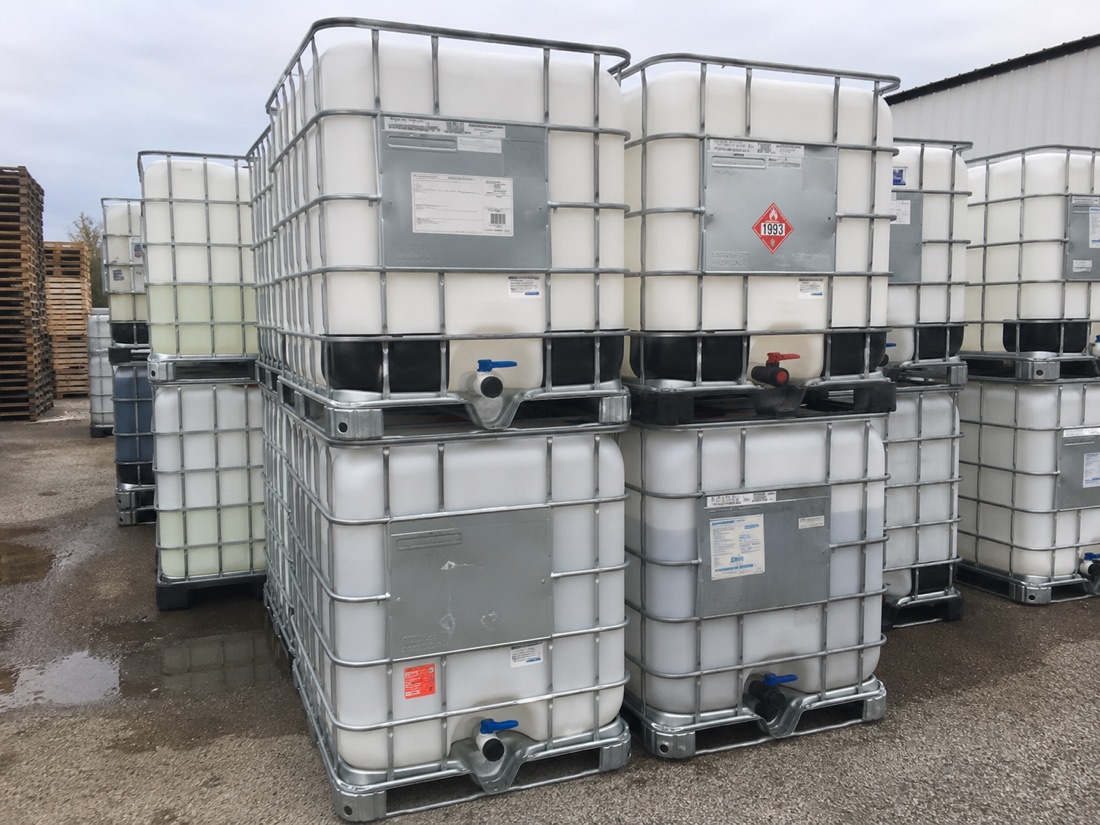
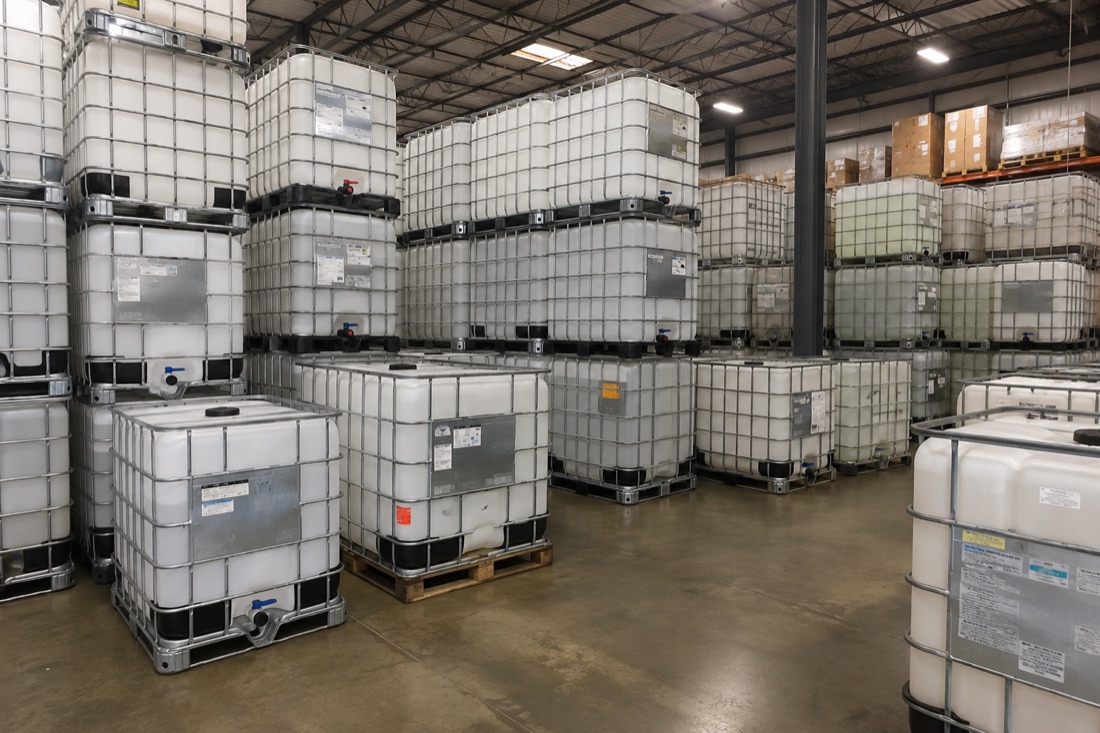
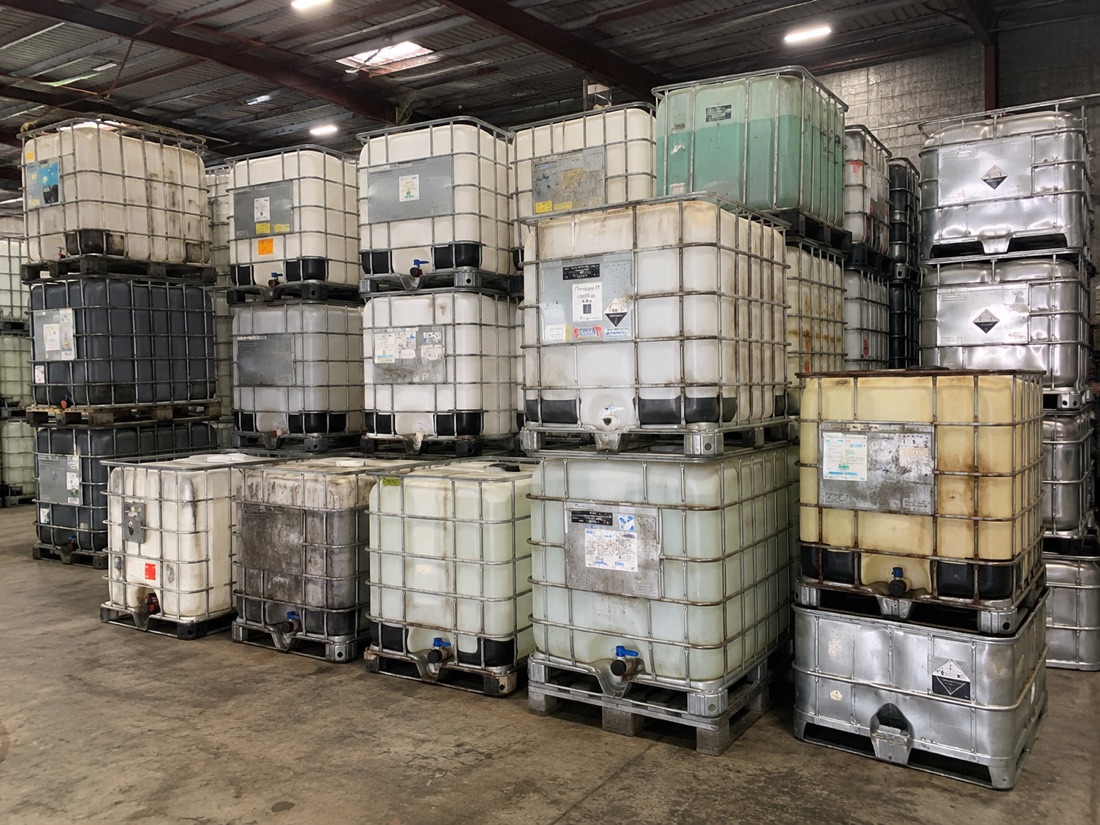
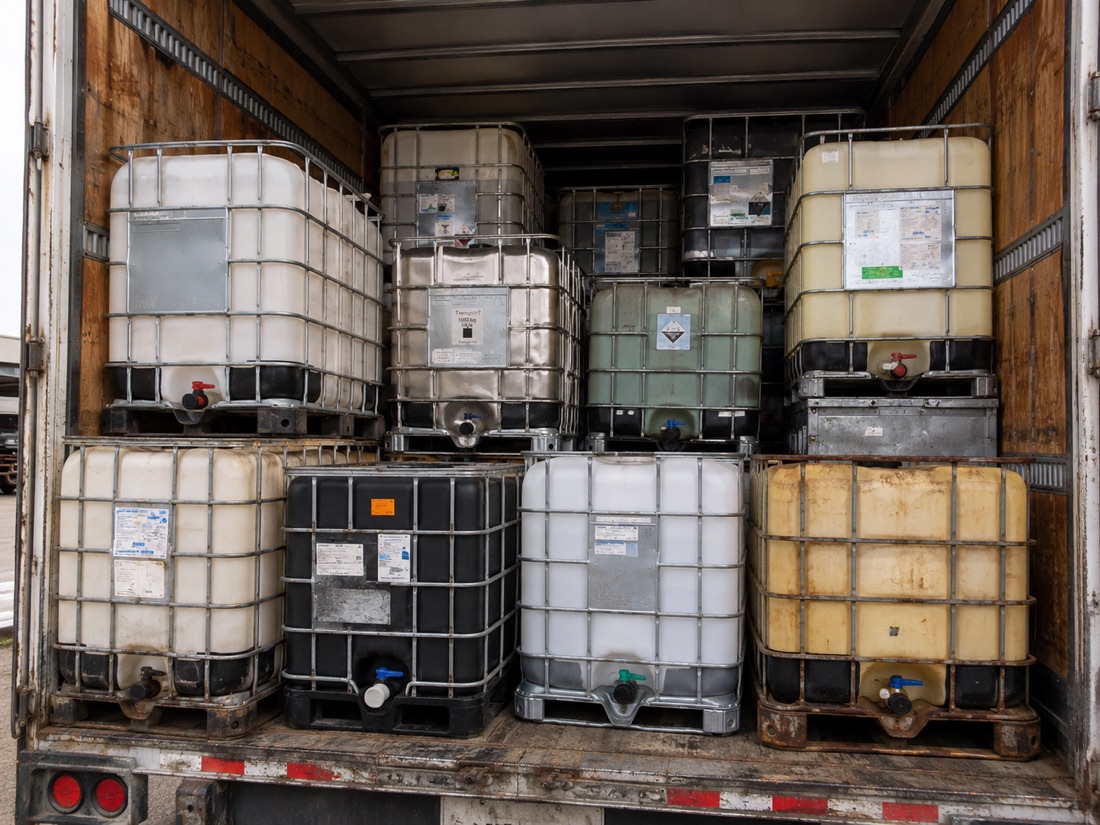
What "embodied energy" means
Every physical object carries a hidden energy debt: the total energy consumed to extract raw materials, process them, manufacture the product, and move it to point of use. For an IBC tote, that debt is substantial and it is paid entirely up front, before the tote has held a single gallon.
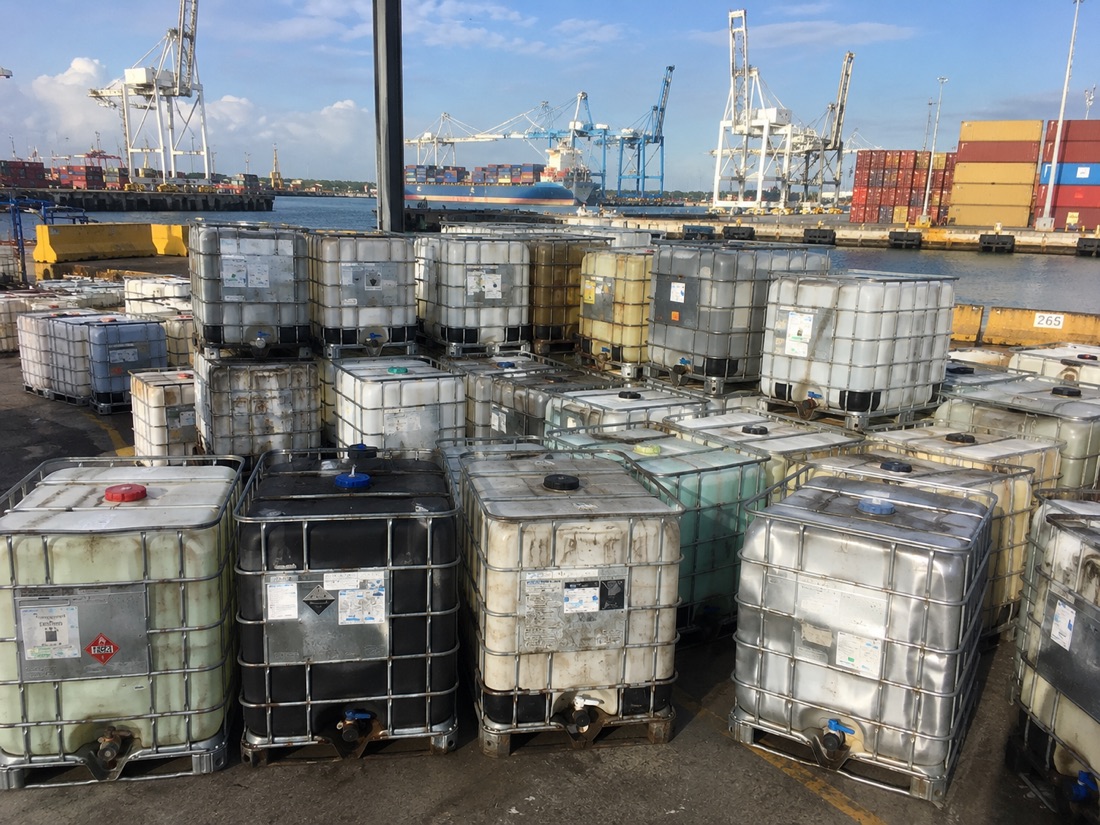
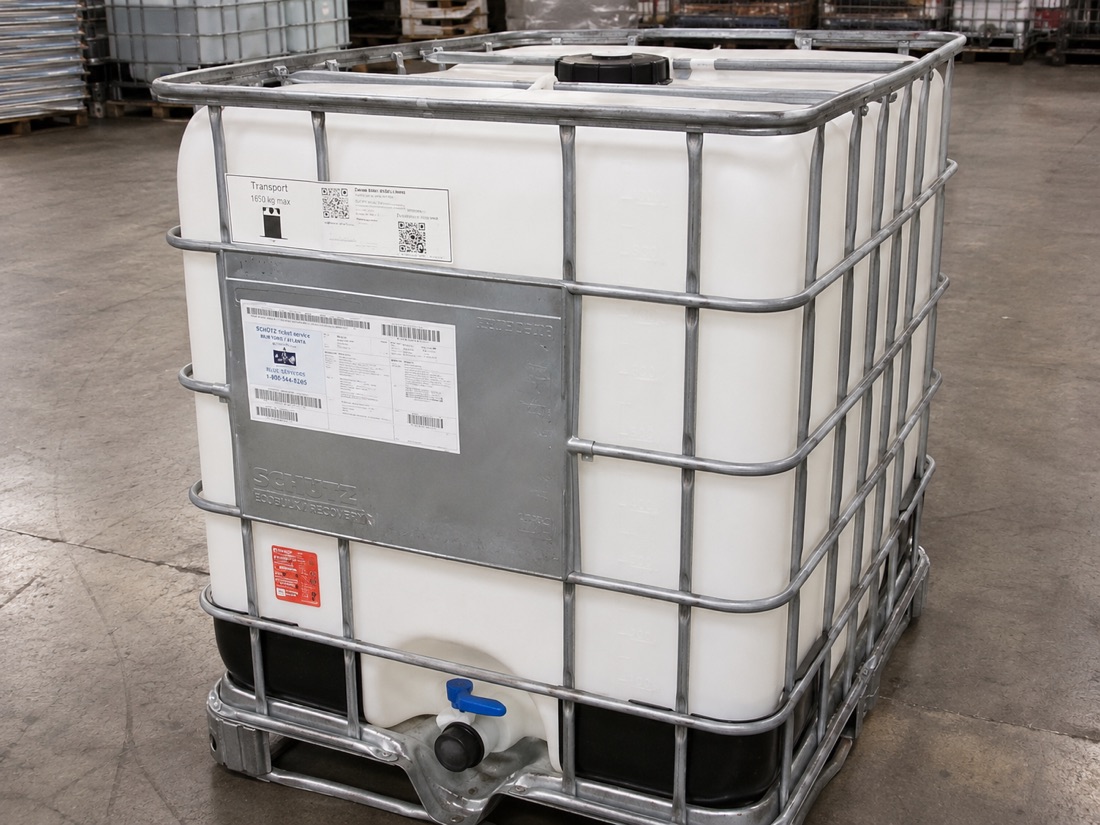
A new tote is roughly 50 to 60 pounds of high-density polyethylene bottle, a galvanized steel cage weighing more than the bottle, and a pallet. Each of those components has its own energy story, and none of it is small.
When you recondition a tote instead of building a new one, you are not saving a little energy. You are avoiding almost the entire manufacturing debt and replacing it with the comparatively tiny energy of a wash cycle. That is the core argument for our reconditioned totes, and it holds up when you run the numbers.
The three energy sinks in a new tote
The HDPE bottle
Virgin HDPE is a petroleum product. Producing polyethylene resin and blow-molding it into a large, uniform bottle is energy-intensive across published lifecycle assessments. The resin production alone dominates the plastic's footprint, and blow molding adds process heat and clamping energy on top.
The steel cage
This is the part people underestimate. A galvanized steel tubular cage weighs more than the plastic bottle, and primary steel is one of the most energy- and carbon-intensive materials in common industrial use. Galvanizing adds a zinc coating and its associated processing. The cage is often the single largest embodied-carbon component of a new tote.
The pallet and assembly
Whether wood, steel, or composite, the pallet and the final assembly and shipping of a bulky, mostly-empty container to the filler all add measurable energy. Transporting an empty new tote is transporting a lot of air.
What reconditioning actually costs in energy
Reconditioning replaces all of that with a fundamentally different process:
- Inspection costs almost nothing beyond labor.
- Washing uses hot water, detergent, and pump energy. This is the largest energy input in reconditioning, and we work hard to shrink it, which is why we recirculate wash water.
- Rebottling (only when the bottle is compromised) reintroduces a new HDPE bottle but keeps the existing steel cage and pallet, avoiding the largest carbon component entirely.
- Recaging or component swaps use reclaimed parts wherever possible.
The comparison looks like this in relative terms:
| Component | New tote | Wash & reuse | Rebottle (cage kept) |
|---|---|---|---|
| HDPE bottle energy | Full | Avoided | Full (bottle only) |
| Steel cage energy | Full | Avoided | Avoided |
| Pallet energy | Full | Avoided | Avoided |
| Wash energy | None | Small | Small |
Even in the worst case for reuse, rebottling, you retain the steel cage, which is typically the heaviest single carbon load. A straight wash-and-reuse avoids essentially all of the manufacturing debt.
The order-of-magnitude takeaway
The precise figures vary by facility, energy mix, and how you draw the lifecycle boundaries, and any honest analyst will tell you that. But the direction and rough scale are not in dispute across the packaging LCA literature: reusing a durable industrial container displaces the vast majority of its cradle-to-gate energy and carbon.
The most sustainable tote is not the recycled one. It is the one that never had to be built again.
Recycling HDPE is genuinely valuable, and we do it through our recycling service when a bottle truly reaches end of life. But recycling still requires grinding, washing, remelting, and remolding. Reuse skips all of that. In the waste hierarchy, reuse sits a full tier above recycling for exactly this reason.
Why this shows up in your numbers, not just ours
For a company tracking Scope 3 emissions, packaging is often an overlooked line. Switching a portion of your tote fleet from new to reconditioned is one of the cleaner, more defensible reductions you can claim, because the avoided-manufacturing logic is straightforward and the data supports it.
A few practical points for anyone building this into a sustainability report:
- Count avoided production, not just recycled content. Reuse avoids manufacturing outright, which is a larger and more honest claim than recycled-content percentages.
- Track cycles, not just units. A tote that goes through several fill-reuse cycles amortizes its original energy debt across all of them. More cycles, lower per-use footprint.
- Attribute the wash energy honestly. Reconditioning is not free. But the wash energy is a small fraction of new-build energy, and disclosing it makes your claim more credible, not less.
We publish more of our approach on our sustainability page, and our grades reference explains how we decide when a tote can be reused versus recycled.
The bottom line
Reconditioning is not a marginal green gesture. It is the single largest lever available for cutting the embodied energy of bulk packaging, because it attacks the biggest debt, the steel and the virgin plastic, at the source by simply not incurring it again. The data has said this for years. The harder part is building the reverse logistics to actually get used totes back and cleaned, which is the work we do every day.