The manager's leverage point
If you run operations or procurement, packaging is one of the few footprint levers entirely within your control. You do not need to redesign your product or renegotiate your energy contract. You just need to change how containers flow into and out of your facility, and that is a purchasing and logistics decision, which is your domain.
This guide is written for the manager who wants a defensible, practical plan, not a slogan. We will move from the easiest wins to the more structural ones.
Step 1: Measure what you throw away
You cannot shrink what you do not count. Start with a simple audit of container flow:
- How many totes, drums, and pallets enter your facility per month?
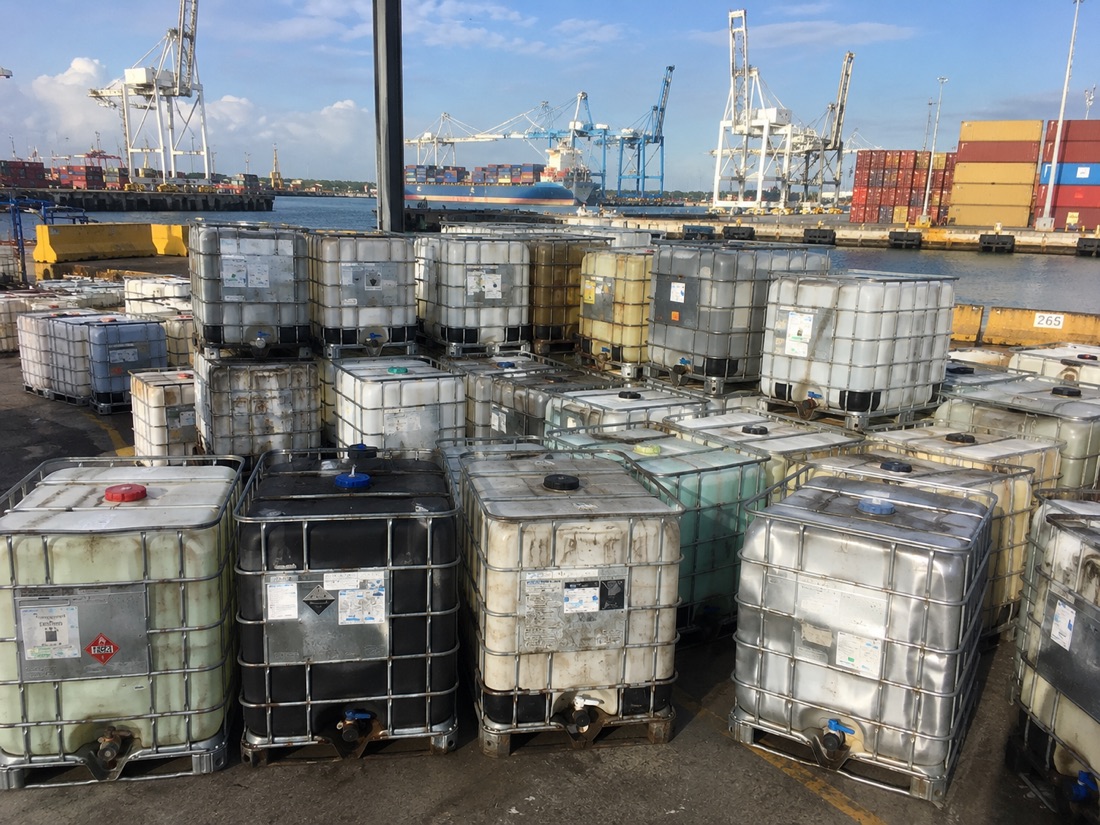
- What happens to each when empty? Landfill, recycling, return, reuse?
- What are you paying in disposal fees for empties?
Most managers are surprised by two numbers: how many empty containers leave as waste, and how much they pay to make that waste go away. That disposal cost is often the fastest justification for change, because reducing it saves money and footprint at the same time.
Step 2: Move up the waste hierarchy
The waste hierarchy is the whole framework, and it is worth internalizing:
- Reduce the number of containers you use at all.
- Reuse containers through multiple cycles.
- Recycle materials when reuse is exhausted.
- Dispose only as a last resort.
Every step up that ladder cuts footprint more than the step below it. The single biggest move for most facilities is jumping from dispose-or-recycle up to reuse.
Reduce first
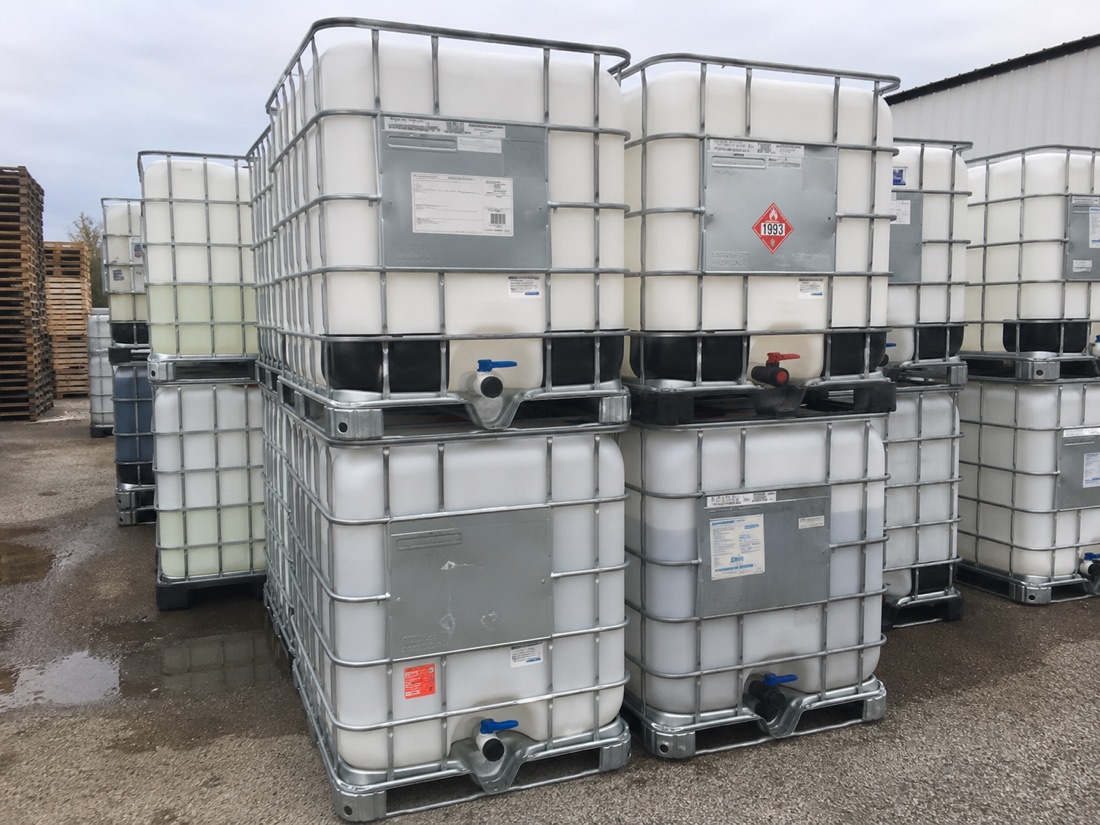
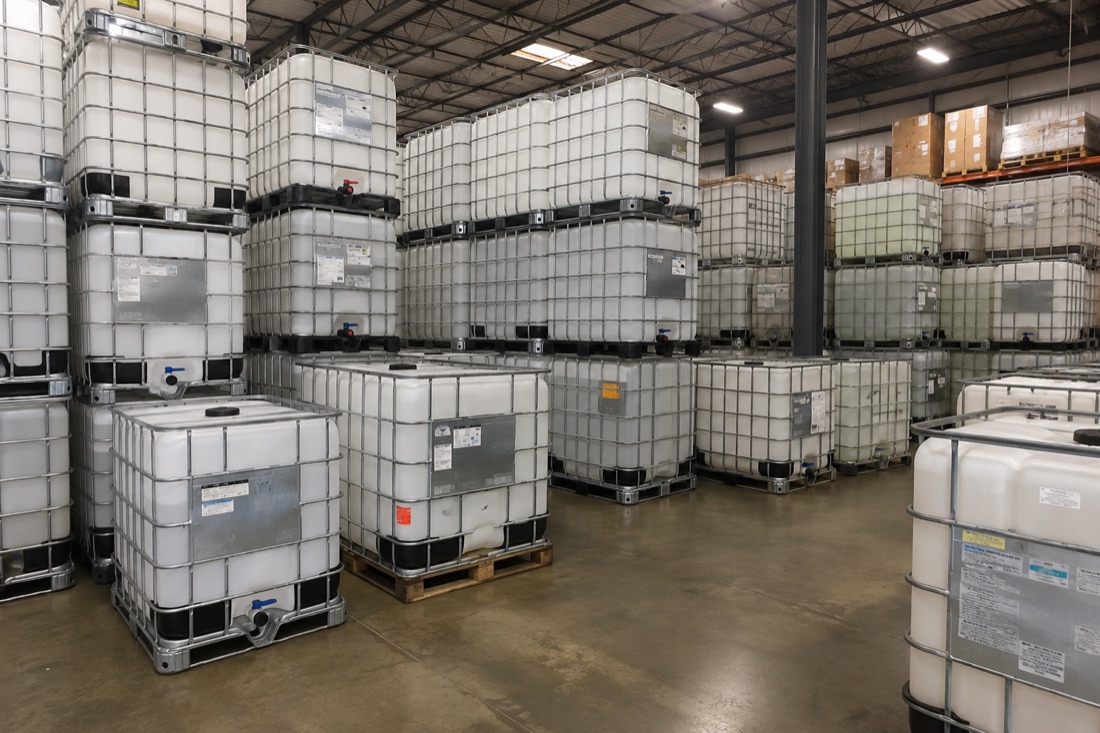
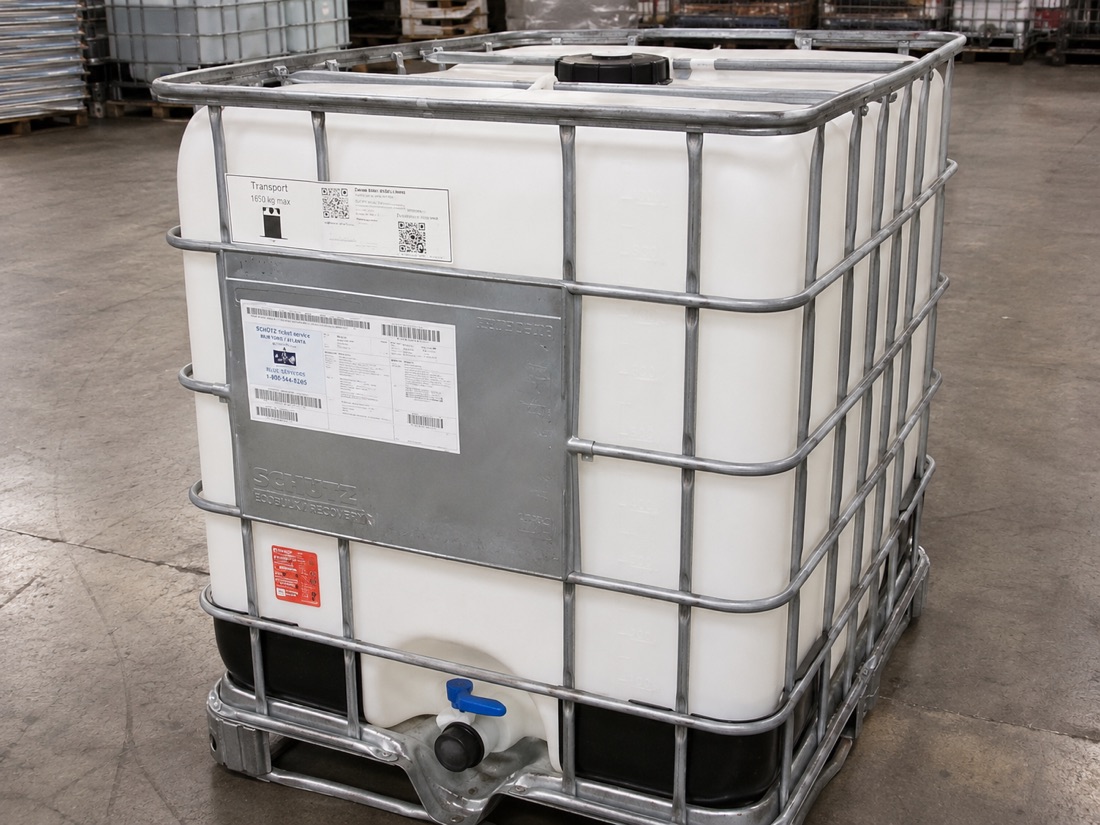
Can you consolidate? Buying an ingredient in totes instead of drums cuts container count, handling, and waste dramatically for the same volume. Our history of the IBC explains why one tote replaces several drums. Fewer, larger containers is often the cleanest reduction available.
Reuse aggressively
This is where the real gains live. Two moves:
- Buy reconditioned instead of new. Every reconditioned tote you purchase avoids the entire manufacturing footprint of a new one, which is dominated by virgin plastic and steel.
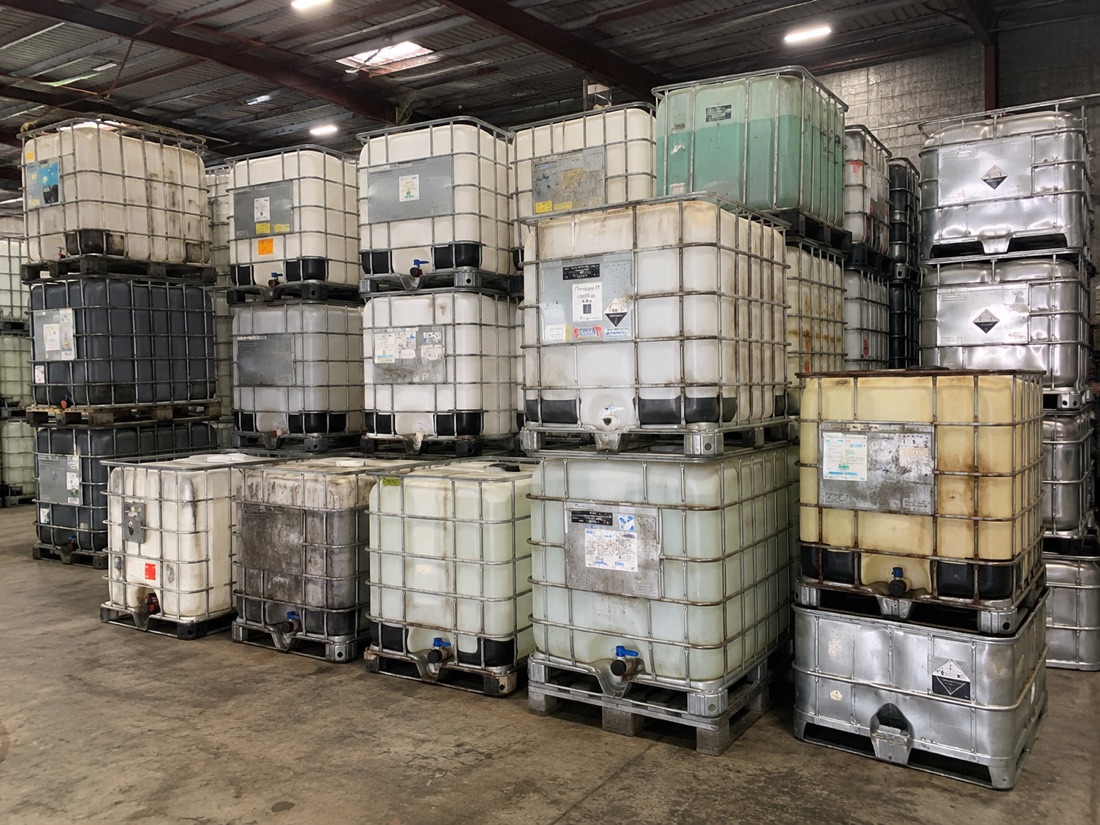
- Sell your empties instead of trashing them. Your empty totes are an asset. Through our buying service we pay for sound used totes, turning a disposal cost into revenue and diverting containers from waste.
That second point is the one managers overlook most. You are currently paying to dispose of something we will pay you for. Reversing that flow improves your budget and your footprint in one move.
Step 3: Close the loop with logistics
The barrier to reuse is almost never willingness; it is logistics. Empty containers pile up because moving them is a hassle. Solve the hassle and the footprint follows.
| Problem | Solution |
|---|---|
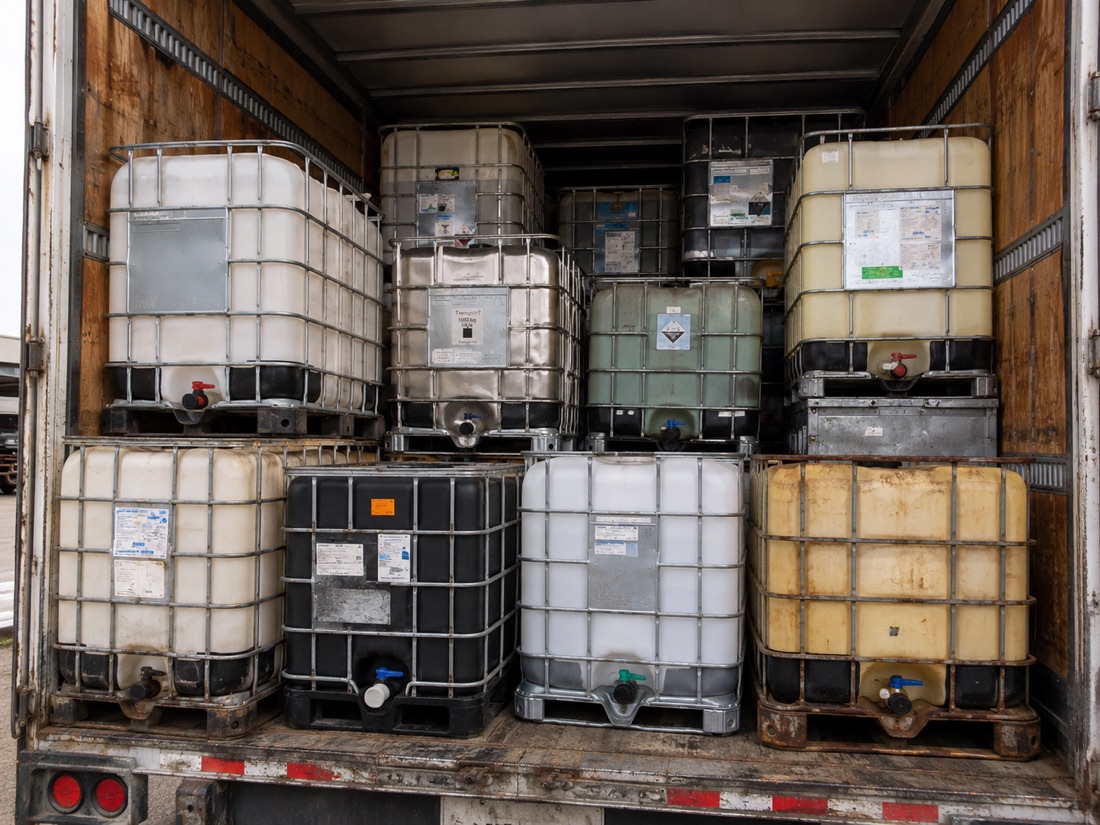
| Empties accumulating | Schedule regular pickups via transportation |
| No space to store empties | Coordinate pickup at a threshold count |
| Unsure what is reusable | Have them inspected; not everything is scrap |
| Recycling truly-dead units | Route to a recycling stream, not landfill |
A standing pickup arrangement is the mechanism that turns good intentions into recurring footprint reduction. It removes the friction that otherwise defaults everything to the dumpster.
Step 4: Make it a procurement policy
One-off good decisions fade. Policies persist. Consider writing into your purchasing standards:
- A default preference for reconditioned over new where the application allows
- A prohibition on landfilling reusable containers
- A required end-of-life route for every container type (return, resell, recycle)
- A supplier requirement to document container reuse and recycling
Codifying it means the reduction survives staff turnover and does not depend on any one person remembering to care.
Step 5: Report it honestly
If your company tracks Scope 3 emissions, packaging reuse is a clean, credible line item. The avoided-manufacturing argument is straightforward and defensible. But report it honestly:
- Count avoided new production, not inflated recycled-content claims.
- Disclose the small energy cost of reconditioning rather than pretending reuse is free.
- Track container cycles over time to show the footprint improving.
Credible modest claims beat impressive vague ones every audit. More detail on how we think about this lives on our sustainability page.
The realistic outcome
A manager who works through these steps typically lands on the same place: fewer containers bought new, empties sold instead of dumped, a standing pickup schedule, and a written policy that keeps it going. None of that requires a sustainability title or a big budget. It requires asking procurement a few pointed questions and setting up the logistics once.
The footprint reduction is real, the cost usually drops rather than rises, and the whole thing is defensible if anyone audits it. That combination, cheaper and greener and honest, is rarer than it should be, and packaging is one of the few places you can actually get all three. If you want help sizing the opportunity for your facility, reach out and we will walk through your container flow with you.