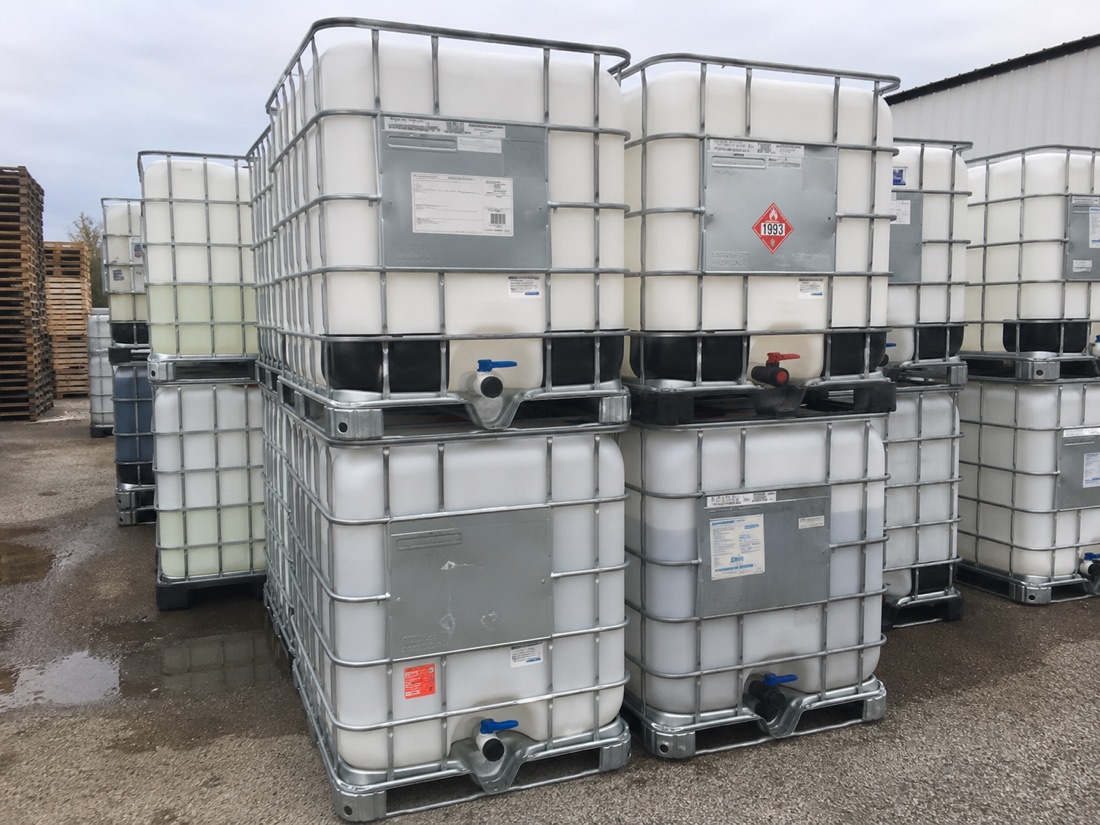
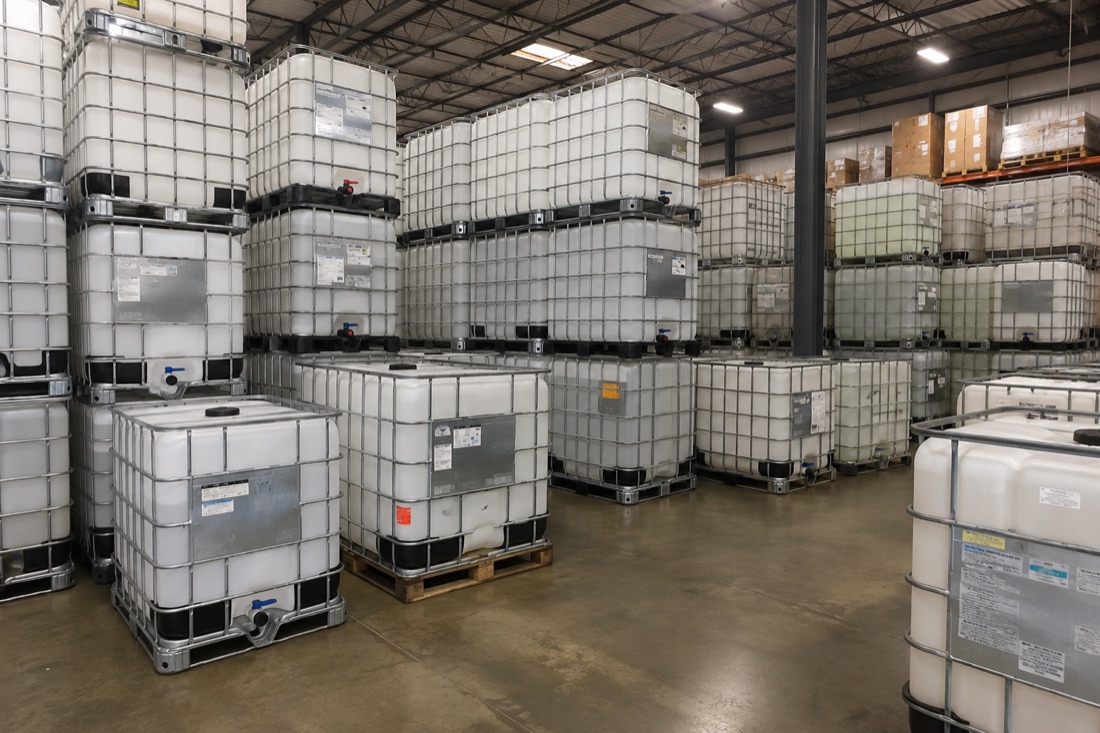
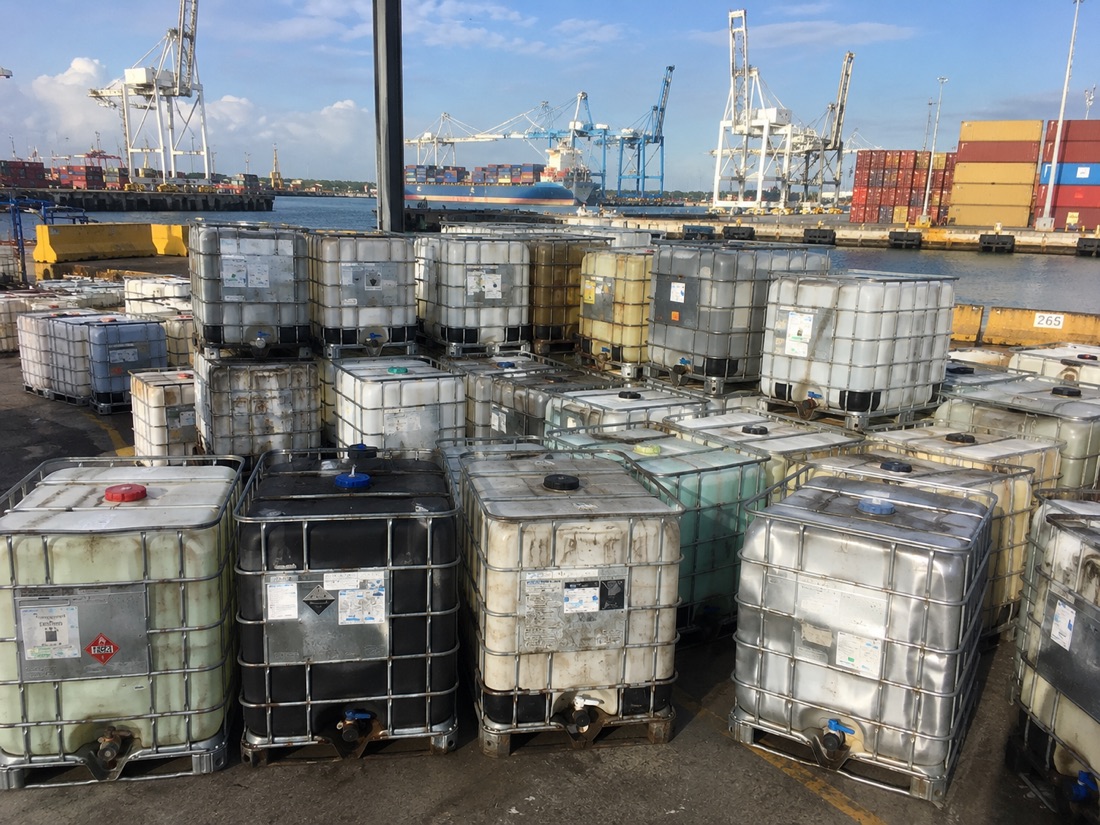
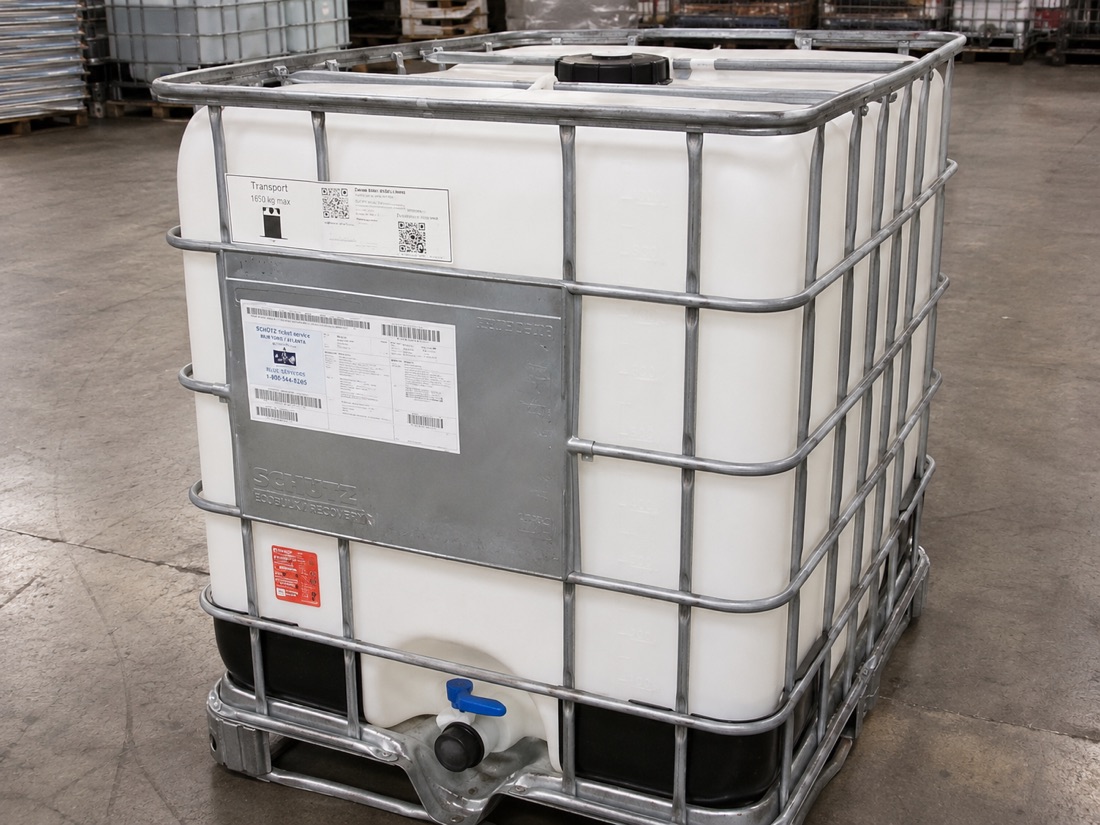
When a brand-new intermediate bulk container arrives on a shrink-wrapped pallet, it looks like the definition of clean. No stains, no residue, no history. But "clean" and "low-carbon" are not the same thing. Every new tote carries an invisible backpack of emissions that were spent long before it ever touched your product. Understanding that backpack is the first step toward buying smarter.
At EcoIBC USA we spend our days moving containers between three lives: manufacture, use, and reconditioning. That vantage point makes the carbon math unusually concrete, so let us walk through it honestly.
What a tote is actually made of
A standard 275- or 330-gallon composite IBC is not one product. It is an assembly of three carbon-intensive parts, and each deserves its own accounting.
- The inner bottle is roughly 30 to 40 pounds of high-density polyethylene (HDPE), a petroleum-derived resin.
- The steel cage is a welded tubular grid, usually 40 to 60 pounds of steel that has been drawn, cut, and welded.
- The pallet base, which can be wood, steel, or composite plastic, adds another 20 to 45 pounds depending on type.
Add valves, gaskets, and a screw cap, and a finished composite tote weighs between 130 and 160 pounds empty. Every one of those pounds represents energy spent at a smelter, a refinery, or an injection-molding press.
Running the emissions ledger
Lifecycle numbers vary by facility and grid, but industry-average emission factors give a defensible estimate. Below is a conservative per-tote breakdown for a new composite unit.
| Component | Typical mass | Emission factor | Estimated CO2e |
|---|---|---|---|
| HDPE bottle | 35 lb | ~1.8 kg CO2e/kg | ~29 kg |
| Steel cage | 50 lb | ~2.0 kg CO2e/kg | ~45 kg |
| Wood/composite pallet | 30 lb | ~0.6 kg CO2e/kg | ~8 kg |
| Molding, welding, assembly | — | process energy | ~15 kg |
| Freight to distributor | — | avg 500 mi truck | ~10 kg |
That lands a new tote somewhere near 105 to 115 kilograms of CO2e before it holds a single drop of product. For perspective, that is roughly the emissions of burning 12 gallons of gasoline, spent just to create an empty box.
The reuse multiplier
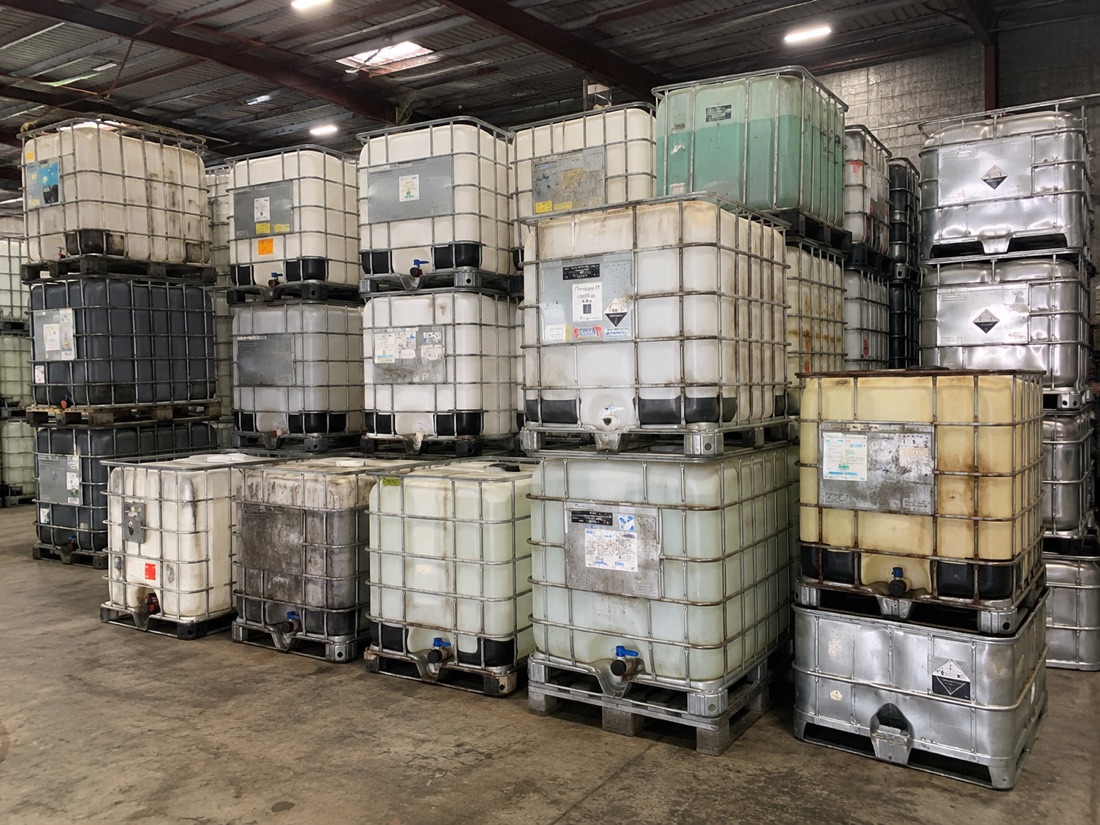
Here is where the story turns hopeful. The steel cage and the pallet are durable; they can survive dozens of cycles. The HDPE bottle is the wear item, and even it can often be triple-washed, pressure-tested, and returned to service rather than melted down.
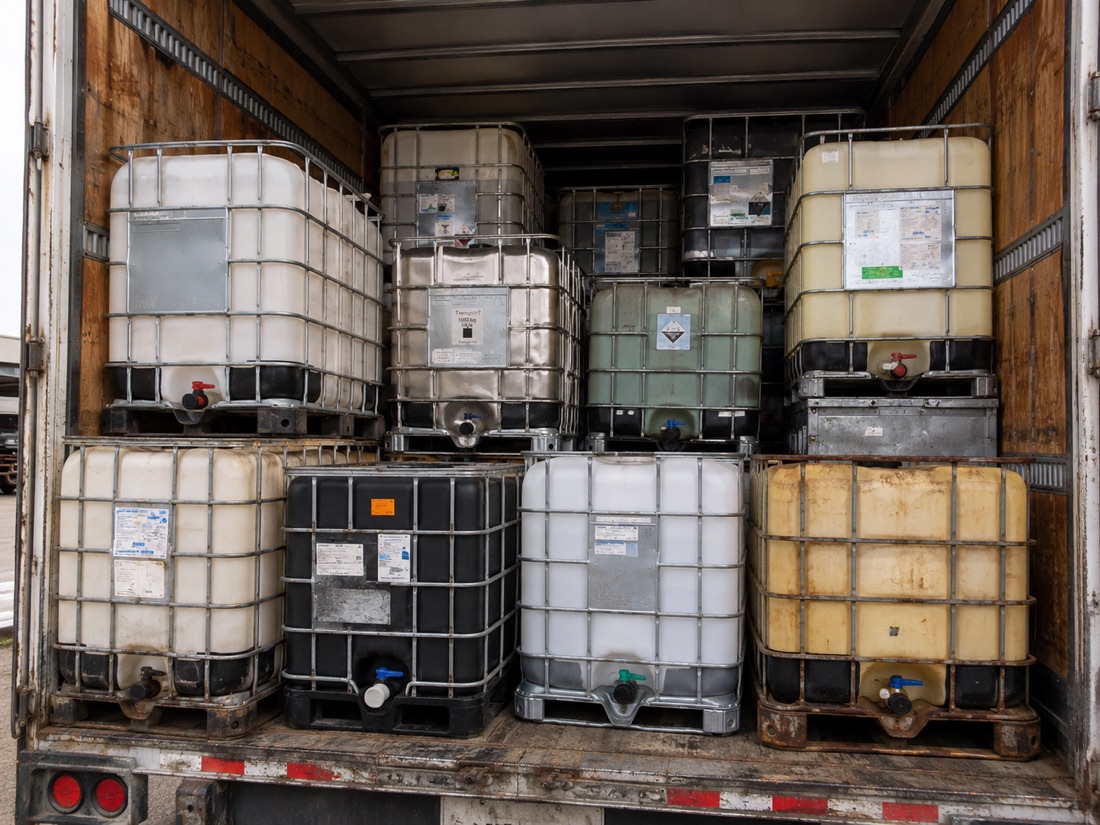
When we recondition a tote instead of building a new one, we avoid nearly all of the steel and pallet emissions and a large share of the molding energy. A reconditioned unit typically carries an embodied footprint 60 to 80 percent lower than a new one. The math is not subtle:
- A new tote: ~110 kg CO2e embodied.
- A reconditioned tote: ~25 to 40 kg CO2e, mostly wash water heating and transport.
- The delta per swap: roughly 70 to 85 kg CO2e avoided.
Multiply that across a fleet of even a few hundred containers per year and the avoided emissions rival taking a passenger car off the road entirely.
A tote is one of the few industrial packages where reuse is not a compromise on quality. A properly recertified unit performs identically to new. The only thing you give up is the carbon.
Recycling is good, reuse is better
It is tempting to assume that because HDPE is recyclable, the new-tote footprint gets "erased" at end of life. It does not work that way. Recycling recovers material, but it still spends energy grinding, washing, and re-extruding plastic, and it does nothing to recapture the steel-cage emissions if the cage is scrapped rather than reused.
The waste hierarchy exists for a reason. Reduce first, reuse second, recycle third. A tote that gets a second and third working life through reconditioning beats one that gets shredded after a single fill, even into pristine new pellets. If you want the raw material recovered responsibly at true end of life, that is what our recycling program handles, but only after every reuse has been exhausted.
What this means for a buyer
None of this requires you to become a lifecycle analyst. It just reframes a purchasing decision you already make. When your spec allows it, choosing a reconditioned tote is the single largest carbon lever available in bulk-liquid packaging, larger than switching pallets, optimizing routes, or lightweighting the bottle.
A few practical guidelines:
- Match grade to need. Not every application demands a virgin bottle. Reserve new units for the handful of uses that truly require them and reuse for the rest.
- Keep the cage in play. Even when a bottle is spent, a good cage and pallet should never hit a landfill. Return them for rebottling.
- Track your swaps. Counting reconditioned units purchased is an easy, auditable sustainability metric for an ESG report.
If you want the full itemized comparison for your own volumes, our sustainability page lays out the assumptions, and our team is happy to model a specific fleet with you through contact. The carbon backpack is real, but so is the option to set most of it down.